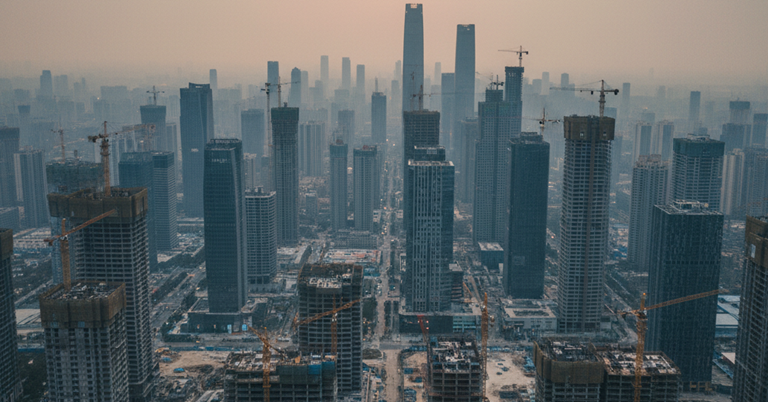
For two decades, China’s real estate market has powered the nation’s growth. It created jobs, lifted GDP, and gave millions of citizens a sense of prosperity. But beneath the cranes and glass towers, a storm was brewing. The Chinese property sector, once seen as unstoppable, is now being called the biggest real estate bubble in history.
The signs were there for years: soaring prices, massive debt, and unchecked speculation. Today, that bubble is showing cracks that could reshape the global economy.
The Rise of the Property Powerhouse
In the early 2000s, China’s cities began to expand at an astonishing rate. Migration from rural areas to urban centers created huge housing demand. The government promoted homeownership as a path to prosperity, and banks opened the floodgates of credit.
Property development quickly became the backbone of the Chinese economy. Construction companies, local governments, and millions of families poured their money into real estate. For many, buying property wasn’t just about shelter. It was an investment, a retirement plan, and a symbol of success.
Between 2000 and 2020, housing prices in top cities like Shanghai, Shenzhen, and Beijing increased more than tenfold. Developers raced to build new projects, often in smaller cities with limited demand. The result was a boom so massive that nearly one-third of China’s GDP became tied to property and related industries.
That scale made the Chinese real estate bubble not just a national issue but a potential global threat.
The Debt-Fueled Dream
The growth wasn’t just driven by demand; it was fueled by debt. Developers borrowed heavily to buy land and fund construction. Local governments, hungry for revenue, sold land at inflated prices to balance their budgets.
Homebuyers joined the frenzy. Families often bought multiple apartments, confident that prices would never fall. Easy access to credit made the illusion of endless growth possible.
But this system depended on constant price increases. Once prices slowed, the entire structure became unstable. By 2021, the cracks were visible. The total debt of Chinese property developers exceeded $8 trillion, and household debt had surged to record levels.
The Chinese real estate bubble was built on leverage, speculation, and a belief that the state would always step in.
The Fall of Giants
The turning point came with Evergrande. Once China’s largest property developer, Evergrande became a symbol of the excess that had defined the boom. With more than $300 billion in liabilities, it could no longer pay its debts.
Its collapse sent shockwaves across the economy. Construction projects halted, investors panicked, and millions of homebuyers were left with unfinished apartments.
Other major developers like Country Garden soon followed. Defaults spread, confidence collapsed, and property prices began to fall. By 2024, new home sales were down by more than 30 percent nationwide.
The bursting of the Chinese real estate bubble didn’t just hit developers. It struck the banks, the middle class, and local governments, all of which are deeply tied to property revenues.
Ghost Cities and Empty Dreams
One of the most striking symbols of the crisis is the rise of China’s ghost cities. Across the country, entire urban areas stand empty, rows of high-rise apartments with no residents.
These cities were built on speculation rather than demand. Developers assumed people would eventually move in, but population growth and income levels couldn’t keep up.
Today, some provinces report housing vacancy rates above 20 percent. That means tens of millions of empty apartments, representing trillions of dollars in frozen wealth.
For many investors, these ghost cities are the physical evidence of how the Chinese real estate bubble grew too fast and too large for its own good.
The Social Impact
The property crash is not just an economic issue; it’s deeply personal. For decades, Chinese families have poured their life savings into homes. Over 70 percent of household wealth in China is held in real estate.
Now, falling prices have wiped out trillions in value. Young people, already struggling with high unemployment, see homeownership as increasingly out of reach. Older generations, who relied on property for financial security, face an uncertain future.
The middle class, once the foundation of China’s economic story, is feeling betrayed. Confidence in the system has eroded. That loss of trust may take years to rebuild.
Why the Bubble Grew So Large
Several factors made this bubble unprecedented in scale:
- Government Policy: Local governments relied on land sales for up to 40 percent of their revenue. That encouraged them to keep prices high.
- Cultural Beliefs: Homeownership became a social expectation, especially for men seeking marriage. This drove demand far beyond necessity.
- Limited Investment Options: With few safe alternatives, property became the default investment for millions of citizens.
- Loose Credit: Banks and shadow lenders provided easy financing, inflating prices further.
- Speculation: Many investors bought multiple properties purely to flip for profit.
Together, these forces created a feedback loop that made the Chinese real estate bubble the largest in modern history.
The Government’s Tightrope
The Chinese government now faces a delicate balance. If it intervenes too strongly, it risks encouraging more reckless behavior. If it does too little, the slowdown could spiral into a full-blown financial crisis.
Beijing has rolled out several measures to stabilize the sector. These include cutting interest rates, easing mortgage restrictions, and offering bailout funds to struggling developers.
But confidence remains low. Homebuyers are reluctant to purchase new properties, fearing developers won’t complete projects. Developers, in turn, can’t secure financing without new sales. It’s a vicious cycle.
The government’s long-term goal is to shift growth away from property and toward manufacturing, technology, and consumption. But changing an economy so dependent on real estate is a monumental task.
Global Ripple Effects
China’s property slowdown has already begun to affect the global economy. Commodity exporters like Australia and Brazil have seen lower demand for steel and iron ore. Luxury markets in places like London and Vancouver, once buoyed by Chinese buyers, are also cooling.
Investors worldwide are watching closely. The scale of China’s property sector means any major collapse could trigger global financial contagion. International banks, construction companies, and supply chains are all exposed in some way.
The Chinese real estate bubble has become a warning to other nations about the dangers of debt-driven growth.
What Comes Next
The coming years will determine how severe the fallout becomes. Several possible scenarios are emerging:
- Slow Deflation: The government manages to deflate the bubble gradually, preventing a full collapse but accepting years of slow growth.
- Hard Landing: Defaults accelerate, property prices plunge, and financial instability spreads across the banking system.
- Structural Reform: Beijing uses the crisis as an opportunity to restructure the economy, reducing reliance on property and boosting other industries.
Whichever path China takes, one thing is certain: the age of property-driven prosperity is over.
Lessons from the Biggest Real Estate Bubble in History
The rise and fall of Chinese property hold lessons for policymakers everywhere:
- Economic growth built on speculation is never sustainable.
- Easy credit and unchecked construction can create short-term prosperity but long-term instability.
- A strong economy needs balanced investment, not dependence on one sector.
- Transparency and accountability are essential to prevent bubbles from growing unchecked.
The Chinese real estate bubble shows what happens when ambition and leverage outpace demand and prudence.
The Future of China’s Cities
Despite the crisis, China’s urban story isn’t over. Cities like Shanghai, Shenzhen, and Chengdu will continue to attract talent and innovation. But the next phase of growth will likely focus on quality rather than quantity; on building livable, sustainable cities instead of empty ones.
Developers that survive will need to adapt. The future will belong to companies that focus on affordability, green building, and long-term community planning.
If China can successfully rebalance, it may emerge stronger, though poorer in illusion.
Final Thought
The collapse of the Chinese real estate bubble marks the end of an era. What began as an engine of growth has become a source of instability. The challenge now is not to rebuild the same model, but to create a new foundation for sustainable progress.
For decades, property symbolized China’s rise. Now it serves as a warning of how unchecked optimism, speculation, and debt can turn progress into peril. The world will be watching closely as China writes the next chapter of its economic story.