
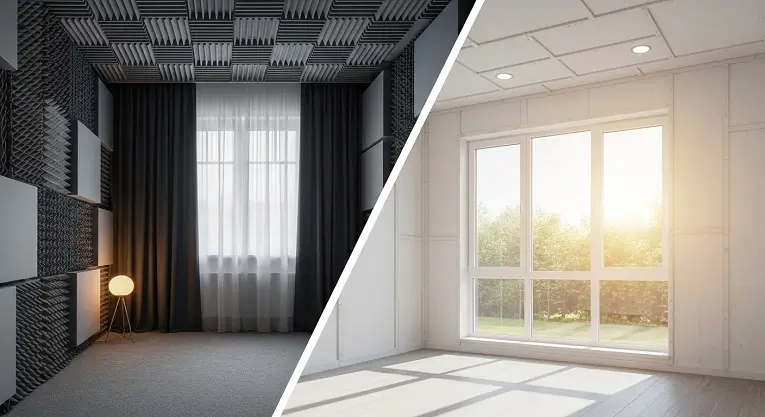
Tenants increasingly look for homes that support comfort, well-being, and cost efficiency. Acoustic comfort plays a central role, as excessive noise can elevate stress, disturb sleep, and reduce concentration. Simultaneously, energy-efficient buildings lower utility costs, improve sustainability, and appeal to environmentally conscious renters. Balancing soundproofing and energy efficiency can influence rent levels, tenant satisfaction, and a property’s overall success.
The Importance of Acoustic Comfort
Acoustic comfort is a key part of indoor environmental quality, directly affecting how tenants feel, concentrate,e and rest in a property. Prioritizing soundproofing may enhance occupant comfort, satisfaction, and long-term tenancy.
High noise levels from traffic, construction, or nearby venues may reduce perceived quality of living and make a property less appealing to potential tenants. Persistent noise can disrupt sleep, affect concentration,tion and contribute to stress. As a result, properties exposed to ongoing noise may experience higher tenant turnover, leading to potential vacancies and increased leasing costs.
From a value perspective, buyers and investors may consider noisy locations less desirable, which can influence demand and resale potential. Quieter properties can appeal to a broader range of buyers and may retain value more effectively, particularly during slower market conditions.
The Value of Energy Efficiency
Greener buildings benefit from better insulation, energy-efficient enve, lopes and renewable technologies, such as heat pumps and solar panels. Tenant demand for energy-efficient features can encourage landlords to invest. Lighting accounts for about 5% of household energy use, and LED bulbs reduce consumption while lasting longer and delivering equal or better illumination. Power strips help cut standby power by allowing multiple devices to be switched off at once, lowering unnecessary energy use and electricity bills.
Choosing ENERGY STAR–rated appliances further reduces energy consumption and may qualify for utility rebates, making them a practical and sustainable option. Additionally, energy efficiency in rental housing can influence rent levels, tenant satisfaction, and long-term building value. More energy-efficient apartments can command modest rent premiums, although the size of these premiums varies by location, property type,e and market conditions.
Tenants’ willingness to pay for improved energy performance depends on awareness, potential energy savings, income, and demographics, with older tenants often showing higher interest. A key challenge is the landlord–tenant split-incentive, where landlords bear retrofit costs but tenants reap the energy savings. Information gaps between landlords and tenants further limit investment in energy upgrades, though increased transparency and clear energy labels can encourage adoption. Ultimately, energy efficiency can shape rental choices, motivate landlord investment, and support a more sustainable rental market.
The Investment in Sound and Silence
Acoustic performance is essential in construction quality without necessarily increasing overall building costs. When designers select appropriate performance criteria and materials, buildings can meet mandatory sound insulation requirements. In both solid and timber structures, sound insulation does not inherently act as a cost driver within the scope of minimum regulatory standards. You can invest in effective soundproofing without always requiring major structural changes. Simple upgrades can significantly improve tenants’ acoustic comfort.
For instance, high-performance flooring underlayments have acoustic properties that limit the transfer of sound between floors, reducing disturbances and enhancing overall living quality. Well-designed acoustic solutions protect occupant health by supporting privacy and reducing noise-related disturbances. Reducing acoustic standards below mandatory thresholds introduces health and satisfaction risks that may affect long-term building performance.
Acoustic comfort also influences how occupants perceive their living environment, particularly regarding impact noise between dwellings. When residents perceive acoustic conditions as inadequate, dissatisfaction may increase, and tenancy duration may shorten. These outcomes can increase life cycle costs through higher tenant turnover, despite lowerup-frontt construction costs.
From an investment perspective, optimised acoustic design supports both regulatory compliance and long-term economic stability without requiring higher initial costs. Property owners should consider:
- Impact insulation class (IIC): How well flooring reduces impact noise. Standard multifamily building codes require at least 50 IIC. Acoustic underlayments can raise it, further decreasing noise transfer through floors.
- Sound transmission class (STC): How effectively a wall or floor blocks airborne sounds, including voices and music. The minimum is often STC 50.
- Delta IIC (ΔIIC): The improvement in impact noise reduction provided by an underlayment, independent of the base floor assembly. Typical underlayments are ΔIIC 18 to 25.
The Benefits of Energy Efficiency
Energy efficiency remains the most cost-effective approach to reducing energy consumption in buildings, even as renewable technologies gain popularity. High-performing buildings effectively reduce operational expenses, leading to significant annual savings. According to ENERGY STAR, Energy-efficient properties can command rents 3% to 16% higher, with occupancy rising to 10%.
Rising energy costs have made operating expenses more visible to tenants, increasing demand for buildings that minimise monthly utility bills. Energy-efficient upgrades help stabilise long-term costs, making properties more predictable and attractive to financially responsible tenants. As a result, high-performing buildings are cheaper to run and easier to position as premium, low-stress living environments.
Combine Both Strategies for an Unbeatable Property
Investing in both acoustic performance and energy efficiency creates properties that meet tenant expectations and protect occupant health. Optimised sound insulation can improve comfort without raising construction costs, while energy-efficient measures reduce operating expenses and enhance market value. Properties that combine these upgrades often achieve higher rents, longer tenancies, and stronger appeal to conscious renters. Addressing both factors helps landlords mitigate risks related to turnover, satisfaction, and regulatory compliance.