As a construction professional, you understand the thin margin for error on jobsites. Projects are challenging when hemmed in by traffic and existing structures. When discussing the approach, the conventional playbook can be insufficient. However, innovative methods and technologies are reshaping the modern cityscape. Here is a guide to deploying solutions and conquering the roadblocks.
The Puzzle of Urban Construction
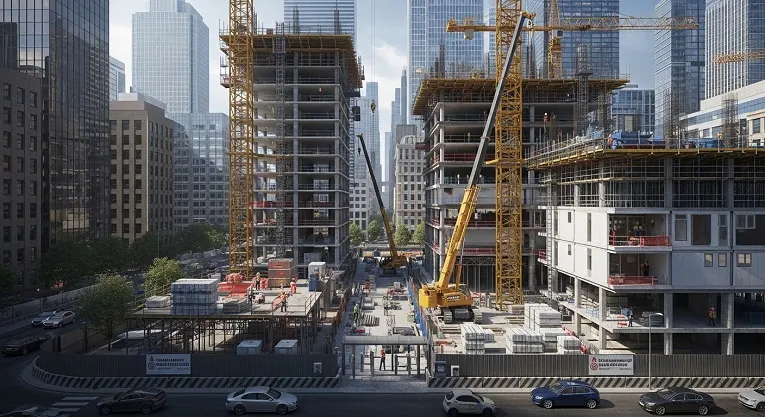
Building on open lots in urban areas requires integration into a dense, living system. Your decisions are constrained by the existing surroundings, whether above, below, or around the site. The limitations create a 3D challenge where one problem can create another.
Space
Urban projects lack a buffer if buildings extend to the property line. The adjacent site has tenants, operations, and structural sensitivities that you must account for. It’s also essential to consider the subterranean environment, including subway tunnels and sewer lines. All equipment must operate within defined vertical planes.
Height
Regulations limit projects before they can begin. Aviation flight paths and zoning laws determine height limits, thus creating an invisible wall in the sky. Contractors must plan the size and placement of cranes, favoring more specialized equipment. Weather is another critical factor, as wind speed increases with elevation.
Access
Access is a puzzle in itself, considering the competition on public roads. Large trucks must use the same congested streets as commuters, buses, and pedestrians. Meticulous timing is necessary for urban construction, often leading to work in the middle of the night. If one delay occurs, the domino effect could affect concrete trucks, cranes, and steel erectors.
Solutions to Urban Construction Constraints
Successfully navigating the matrix of spatial, vertical, and logistical challenges requires forward-thinking project strategies. Proactive urban builders treat constraints as interconnected variables in a complex equation. Here are three methodologies and technologies to de-risk timelines.
1. Modular Construction
Modular construction represents fundamental shifts in the building process. Instead of bringing raw materials to urban sites, the process takes place in an off-site factory. Precast concrete walls and timber frame panels make work easier on-site once the prepared foundation is set.
It solves the space issue by reducing a jobsite’s footprint, as the location becomes a streamlined assembly point. Access is addressed through fewer coordinated deliveries and consolidated transportation. Modular construction also benefits construction professionals by reducing waste, as most work occurs in the factory.
2. High-Speed Construction Hoists
Vertical transportation quietly dictates the pace and profitability, especially in high-rise projects. When buildings get taller, the time spent traveling can drain productivity. Construction managers use high-speed hoists to avoid bottlenecks, especially during shift changes and material movement.
Your project may benefit from using boom lifts, which can rise 135 feet and access hard-to-reach areas. Telescopic booms have a 150-foot vertical range due to their straight arm. These mechanisms address height and access issues and ease space constraints by remaining stationary.
3. Drone and Laser Scanning
Past projects relied on manual site monitoring, so the industry has shifted toward drones. Crewless aircraft give construction managers overlapping images to create a 3D map of the entire site. This advanced technology addresses space constraints by automating inventory tracking and freeing up valuable on-site space.
Projects benefit from improved facade inspection at any height. While scaffolds and cranes are useful, drones can fly to any level of a building to perform visual inspections and save time. Regarding access, construction managers use live feeds from UAVs to check access routes. If a path is blocked, the driver can find alternate routes to prevent trucks from getting stuck.
Navigating the New Urban Blueprint
The constraints of urban construction are the realities of the modern building landscape. With a minuscule margin for error, the solutions must strategically integrate innovative methods and technologies. Success requires modular construction, high-speed hoists, and intelligence platforms to embrace proactive planning. Tech-driven approaches help your leadership teams transform constraints into competitive advantages.