
How to Replace a Bathroom Extractor Fan: A UK Homeowner’s Guide
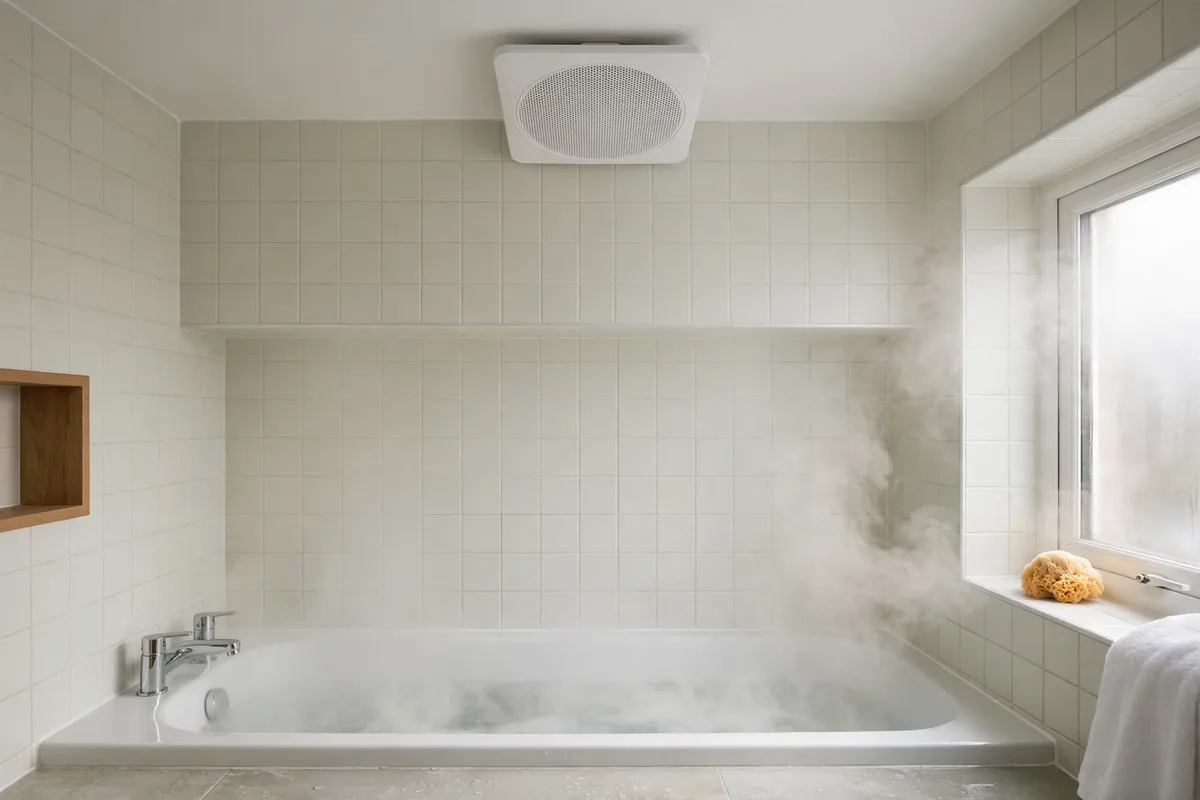
A bathroom extractor fan is the hardest working appliance in the room, and the easiest to forget. It runs for a few minutes after every shower, pulls litres of steam out of the air, and then sits quietly until the next one. When it stops doing that job, the first signs are easy to miss. The mirror stays fogged long after your shower. The paint above the shower starts to peel. Black spots appear in the corners of the ceiling and around the window frame. By the time the mould is visible, the fan has probably been failing for months.
Replacing a bathroom extractor fan is one of the most useful small jobs in a UK home, but it is also one of the most misunderstood. It is not quite a DIY job, and it is not quite a job you should leave entirely to someone else. A like-for-like swap of the fan unit itself is straightforward for a qualified electrician and usually takes one to two hours. Choosing the wrong replacement, fitting a fan that is too weak for the room, or treating bathroom wiring as a casual weekend job are the mistakes that turn a simple swap into a damp problem that comes back.
This guide covers the whole decision in order: how to tell the fan has actually failed, what a like-for-like swap involves, how to choose the right replacement, what it costs in the UK, when the law says an electrician must do the work, and the free cleaning fix that is worth trying before you spend anything.
Signs Your Bathroom Extractor Fan Has Failed
A fan can fail gradually, which is why most people only notice when the mould arrives. Check for these signs before you buy anything.
Steam hangs in the air. After a normal shower, the mirror and windows should clear within a few minutes of the fan running. If the room is still steamy ten minutes later with the fan on, the fan is not moving enough air. It may be running but worn out, or the duct behind it may be blocked or crushed.
The fan is noisy, or it hums and does nothing. A healthy fan makes a low, steady sound. A grinding, rattling or buzzing noise usually means worn bearings. A fan that hums without the blades turning has a seized motor. Both mean the motor is at the end of its life. Checkatrade puts the typical life of a bathroom extractor fan at 10 to 15 years, so a fan older than that owes you nothing.
The fan does not start at all. First check the obvious: the isolator switch, usually a pull cord or a switch outside the bathroom, and the fuse in the fused spur if there is one. If the switch is on and nothing happens, the motor or its internal electrics have failed. Do not open the fan casing to investigate the wiring yourself. That is electrician territory, which is covered later in this guide.
Mould and damp are returning despite ventilation. Black mould on the ceiling, peeling paint, and a musty smell that never quite leaves are signs the room is staying damp for too long after every shower. A failed fan is one of the most common causes, and it is the cheapest one to fix. Our guide to the types of damp in a house explains how to tell condensation damp apart from rising and penetrating damp, so you can be sure the fan is the problem and not a leak somewhere else.
The backdraught shutter has stuck. Many fans have a small flap that stops cold air and draughts coming back down the duct when the fan is off. If the flap is stuck open, you will feel a cold draught from the fan in winter. If it is stuck shut, the fan runs but moves almost no air. A stuck shutter can look like a dead fan, and it is often fixed by cleaning rather than replacing.
The room smells musty even when it looks clean. A fan that runs too briefly, or one that was always too weak for the room, leaves moisture in towels, grout and plaster. That moisture feeds mould you cannot see, behind the bath panel or inside the duct. If the smell persists after a deep clean, the ventilation is the prime suspect.
One sign on its own does not prove the fan is dead. Two or three together, especially in a fan that is more than ten years old, usually do.
Like-for-Like Swap: What Actually Happens
A like-for-like swap means replacing the fan unit with a new one of the same type, in the same place, using the existing wiring and ducting. This is the simplest and cheapest form of replacement, and it is the right choice for most homes where a fan already exists and the ducting is in good condition.
Step 1: The power is isolated. The electrician switches off the circuit at the consumer unit and confirms it is dead before touching anything. The isolator switch alone is not enough for safe working. This is the first reason a like-for-like swap is still an electrician’s job in a bathroom, even though the fan itself is a simple unit.
Step 2: The old fan comes off the wall or ceiling. The cover is removed, the fixings are undone, and the fan is pulled away from the surface so the wiring and duct connection are visible. The electrician checks the condition of both. If the ducting behind the fan is crushed, disconnected or full of debris, that is found at this point, and it may explain why the old fan seemed weak.
Step 3: The opening and duct are measured and checked. The new fan must fit the existing cut-out, or the hole needs enlarging. The duct route is checked for blockages and for a clear run to the outside vent. A fan connected to a duct that ends in the loft, rather than outside, is pumping steam into the roof space, which is a damp problem waiting to happen. That needs fixing as part of the job, not ignoring. The tiles around the fan are checked at the same time, since steam and a failed fan often loosen grout and crack tiles, and any damaged tiling is easier to fix while the fan is off the wall. Our guide to how to tile a bathroom wall covers the preparation and waterproofing that matter most in wet areas.
Step 4: The new fan is wired in. The wiring is connected to the same supply, with the timer or humidistat wired as the new unit requires. If the old fan was a basic switched model and the new one has a timer overrun, the wiring may need a permanent live feed, which the existing cable may or may not provide. This is a common surprise in older bathrooms, and it is why the electrician checks the wiring before quoting a fixed price.
Step 5: The fan is fixed, sealed and tested. The unit is screwed into place, the cover is fitted, and the fan is tested with the light switch and again after the timer overrun. The electrician checks the airflow at the outside vent, not just that the fan spins, because a spinning fan with a blocked duct moves no air at all.
What a like-for-like swap does not cover. New ducting runs through a loft or an external wall, moving the fan to a different position, or adding a fan where none existed are all bigger jobs. They take longer, cost more, and need more of the electrician’s time. BookaBuilderUK puts new installations with ducting through a loft or external wall at £300 to £950 or more, against £120 to £250 for a like-for-like supply and fit. The gap is the ducting work, not the fan.
If your fan is over a bath or shower, there is one more thing to know before anyone starts. Bathrooms are a special location under BS 7671, the wiring regulations, and a fan over a bath or shower sits in Zone 1, where it needs a rating of at least IPX4. Your electrician will confirm the new fan is rated for its position. The legal side is covered in full later in this guide.
Choosing the Right Replacement Fan
Buying the cheapest fan that fits the hole is the most common mistake in this job. A fan that is too weak for the room will run, make noise, and leave the steam exactly where it was. Choose on three things: extraction rate, controls, and the type of fan.
Extraction rate: match it to the room. Building Regulations Part F sets the ventilation rates a bathroom fan must achieve, and the practical figure most UK guides work to is at least 15 litres per second, roughly 54 cubic metres per hour, for a typical bathroom (Go-Assist). Larger bathrooms, bathrooms with no opening window, and en-suites used for long showers need more. As a rough rule, multiply the room’s volume in cubic metres by the air changes you want per hour, and choose a fan that meets that number. A small cloakroom and a large family bathroom are not the same job, and a fan sized for one will fail in the other.
Axial fans: the standard choice. Most UK bathroom fans are axial fans, where the air moves straight through the unit. They are cheap, quiet enough, and fine for short duct runs through a wall. Basic axial units cost around £20 to £60 for the unit alone (BookaBuilderUK, MyJobQuote). If the duct run is short and straight, an axial fan is all you need.
Centrifugal and inline fans: for longer duct runs. If the fan has to push air through a long duct, up into a loft, or around bends, an axial fan loses power quickly. A centrifugal fan, or an inline fan mounted in the loft with only a grille in the bathroom, handles long runs far better. They cost more, but they are the right tool for the job, and fitting a cheap axial fan on a long duct run is money wasted.
Timer overrun: worth having. A timer fan keeps running for a set period, usually 5 to 30 minutes, after the light is switched off. This matters because the steam does not disappear when you leave the room. Without an overrun, the fan stops the moment you switch the light off, and the steam stays. Most modern replacement fans include a timer, and it is one of the cheapest upgrades you can make.
Humidistat: the best control for a bathroom that moulds. A humidistat fan switches itself on when the humidity rises above a set level, and runs until the air is dry again. It does not depend on anyone remembering to switch the light on, and it catches steam from baths as well as showers. In a bathroom that has had mould problems, a humidistat fan is usually the best choice. It costs more than a basic switched fan, but it solves the problem rather than relying on habit.
Noise level: check the decibels. Fan noise is measured in decibels, and the difference between a 25 dB fan and a 35 dB fan is very noticeable in a small bathroom at night. If the bathroom is next to a bedroom, a quiet fan is worth paying for. Manufacturers publish the figure, so compare it before you buy.
What to measure before you buy. Measure the diameter of the existing duct or the size of the existing cut-out, note whether the fan is on a wall or a ceiling, and check how the current fan is controlled, whether by the light switch, a separate switch, or a pull cord. Take a photo of the existing fan and its wiring arrangement to show the electrician. A replacement that does not fit the hole, or needs a wiring feed that does not exist, turns a one-hour job into a half-day job.
What a Bathroom Extractor Fan Replacement Costs in the UK
Costs vary by region and by the job, and London and the South East typically run 10 to 25 percent higher than the national figures (BookaBuilderUK, MyJobQuote). The ranges below are compiled from live UK cost guides checked in November 2026, and they are the figures to budget against, not quotes.
Like-for-like replacement, supply and fit. Expect £120 to £250 all in (BookaBuilderUK). Checkatrade puts the same job at £175 to £225, with a £200 average, and Go-Assist quotes a typical total of around £200 including the fan. If you already own the replacement fan, the labour alone for the swap is typically £80 to £150 (MyJobQuote), and Go-Assist notes labour can be as low as around £85 for a straightforward swap.
A brand-new installation where no fan exists. Expect £250 to £350, with a £300 average (Checkatrade). Where new ducting is needed through a loft or an external wall, the range widens sharply to £300 to £950 or more (BookaBuilderUK). MyJobQuote breaks it down by route: £250 to £450 for a wall or ceiling fan, and £350 to £600 for a ceiling fan ducted via the loft.
The fan unit on its own. Checkatrade averages the unit at £60 to £90, with a £75 average. Basic axial units start at £20 to £60, with wall fans at £20 to £50 and window fans at £40 to £70 in MyJobQuote’s supply table. Timer and humidistat models sit above the basic range, and inline or centrifugal fans for long duct runs cost more again.
How long it takes. A like-for-like swap usually takes one to two hours. A new installation with a ceiling or loft duct run can take up to a full day (MyJobQuote, BookaBuilderUK, Checkatrade). If the quote for a simple swap runs to a full day, ask what extra work is included, because a straightforward like-for-like job should not take that long.
What pushes the price up. A fan over a bath or shower that needs an IPX4 rated replacement, a timer model that needs a permanent live feed the old wiring does not have, ducting that is blocked or disconnected, and a cut-out that needs enlarging all add time. None of these are reasons to delay the job, but they are worth knowing about before the electrician arrives, so the quote matches the work.
Is it worth paying a professional? For a like-for-like swap in a bathroom, yes. The labour cost of £80 to £150 buys a job done under the wiring regulations, tested properly, and covered if something goes wrong. The saving from doing it yourself is small, and the risk in a room full of water and steam is not. The legal reasons are in the next section.
When the Law Needs an Electrician
This is the part of the job that catches people out. A bathroom is not like any other room in the house when it comes to electrics, and the rules are stricter for good reason.
Bathrooms are a special location. Under BS 7671, the UK wiring regulations, a bathroom is classed as a special location because of the combination of water and electricity. The room is divided into zones, and the zone a fan sits in decides what rating it must have. A fan fitted over a bath or shower is in Zone 1 and needs a rating of at least IPX4, which means it is protected against water splashing from any direction (Go-Assist, Checkatrade). A fan elsewhere in the room has different requirements, and your electrician will confirm the right rating for the position.
Replacing the fan is not a casual DIY job. Checkatrade states plainly that replacing a fan unit in a special location should be carried out by a qualified electrician and is not a DIY job. That advice applies even to a like-for-like swap, because the work involves mains wiring in a wet room. A qualified electrician will isolate the circuit properly, confirm the fan rating for its zone, and test the installation when it is done.
New electrical work in a bathroom is notifiable. Go-Assist notes that new electrical work in a bathroom is notifiable under Part P of the Building Regulations. That means work such as adding a new circuit, or installing a fan where none existed, must either be carried out by an electrician registered with a competent person scheme, who can self-certify the work, or be notified to building control. A simple like-for-like replacement of an existing fan does not usually need notification, but anything that adds a circuit or changes the wiring does. If your job involves new wiring, ask the electrician to confirm how it will be certified before the work starts.
Ventilation must meet Part F. Building Regulations Part F sets the ventilation rates for homes, and a new fan installation must meet them. The 15 litres per second figure for a bathroom is the practical benchmark most guides use. A fan that is too weak to meet it is not just ineffective, it does not comply.
What this means in practice. If you are replacing an existing fan in the same place, hire a qualified electrician for the swap, and expect it to take one to two hours. If you are adding a fan where none exists, or moving one to a new position, the same applies, plus Part P notification through your electrician’s competent person scheme. Do not let anyone run new bathroom wiring without confirming certification. The certificate is the proof the work was done properly, and it is the document a future buyer or insurer will ask for.
Cleaning First: The Free Fix to Try Before You Replace It
Before you spend £120 to £250 on a replacement, spend twenty minutes cleaning the fan you already have. A surprising number of supposedly dead fans are simply choked with dust and grease, and cleaning restores them completely. This is the one part of the job that is safe for a homeowner, because it does not involve opening the wiring.
Isolate the power first. Switch the fan off at the isolator, the pull cord or the switch outside the bathroom. Do not rely on the light switch. Confirm the fan has stopped before you touch it.
Remove the cover. Most fan covers clip off or are held by one or two small screws. Pull it gently towards you. Behind it you will usually find a layer of dust on the grille, the blades and the inside of the cover.
Vacuum and wash. Vacuum the dust from the blades, the grille and the cover, using a brush attachment. Then wash the cover in warm soapy water and let it dry fully. Dust on the blades makes the fan noisy, slow and weak, and a thick layer can stop it moving enough air to clear steam at all.
Check the duct opening. With the cover off, look into the duct behind the fan. If it is blocked with dust, lint or debris, vacuum what you can reach. If the duct is crushed or disconnected, that is a repair job, and the fan was never the problem. Also check the outside vent, where leaves, nests and grime can block the airflow. MyJobQuote’s guide to fans that stop working lists ducting changes and blockages as one of the common causes of a fan that seems to have failed.
Check the backdraught shutter. With the cover off, you can usually see the small flap that stops cold air coming back down the duct. Move it gently with a finger. If it is stuck with grime, clean it and confirm it moves freely. A stuck shutter is a common cause of a fan that runs but clears nothing, and of cold draughts in winter.
Test it properly. Put the cover back on, restore the power, and run the fan during a shower. Time how long the mirror takes to clear. If the steam clears in a few minutes and the noise has gone, the fan is fine, and the problem was dirt. If it still struggles, the motor is worn and replacement is the right call.
Cleaning is also the right first step when the grout around the bath is going mouldy despite the fan running. Mouldy grout is often a ventilation problem rather than a cleaning problem, and our guide to how to regrout bathroom tiles covers the repair, while fixing the fan stops it coming back. If your bathroom has no opening window, the fan is doing all the ventilation work, so keeping it clean matters even more. Our guide to how to stop condensation on windows explains the same moisture problem from the window side, and the fix in both cases starts with moving damp air out of the room.
Frequently Asked Questions
How much does it cost to replace a bathroom extractor fan in the UK?
A like-for-like replacement, supply and fit, typically costs £120 to £250, with Checkatrade averaging the job at £200 (BookaBuilderUK, Checkatrade). Labour alone for the swap is usually £80 to £150 (MyJobQuote). A brand-new installation where no fan exists costs £250 to £350 on average, and £300 to £950 or more if new ducting is needed through a loft or external wall (Checkatrade, BookaBuilderUK).
Can I replace a bathroom extractor fan myself?
Checkatrade states that replacing a fan unit in a bathroom, which is a special location under the wiring regulations, should be carried out by a qualified electrician and is not a DIY job. What you can safely do yourself is the diagnosis and the cleaning: checking the isolator switch, measuring the opening, inspecting the duct, and cleaning the cover and blades with the power isolated. Leave the wiring to a professional.
How long does a bathroom extractor fan last?
Checkatrade puts the typical life at 10 to 15 years. A fan that is noisy, slow to clear steam, or older than 15 years is usually at the end of its life. Cleaning can extend it, but worn bearings and a seized motor cannot be repaired economically.
What size extractor fan do I need for my bathroom?
A typical UK bathroom fan should achieve at least 15 litres per second, roughly 54 cubic metres per hour (Go-Assist). Larger bathrooms, bathrooms with no opening window, and rooms used for long showers need a higher rate. Measure the room, match the rate to its volume, and choose a centrifugal or inline fan if the duct run is long.
Do I need planning permission or building control approval?
No planning permission is needed for a like-for-like fan replacement. New electrical work in a bathroom is notifiable under Part P of the Building Regulations, so a new installation must be carried out by an electrician registered with a competent person scheme, who can self-certify the work, or notified to building control. The ventilation must also meet Part F rates.
Why is my bathroom still steamy with the fan running?
Either the fan is too weak for the room, the duct is blocked or disconnected, the backdraught shutter is stuck shut, or the fan is worn out. Clean the fan and check the duct first, then check the extraction rate against the 15 litres per second benchmark. If the fan is old and cleaning does not help, replace it.
Should I get a timer or a humidistat fan?
A timer fan, which runs on for 5 to 30 minutes after the light goes off, suits most bathrooms and is the cheapest useful upgrade. A humidistat fan, which switches itself on when humidity rises and runs until the air is dry, is the better choice for a bathroom that has had mould problems, or one where nobody reliably leaves the fan running long enough.