
Gutter Cleaning Cost UK: Prices by House Type, Frequency and DIY
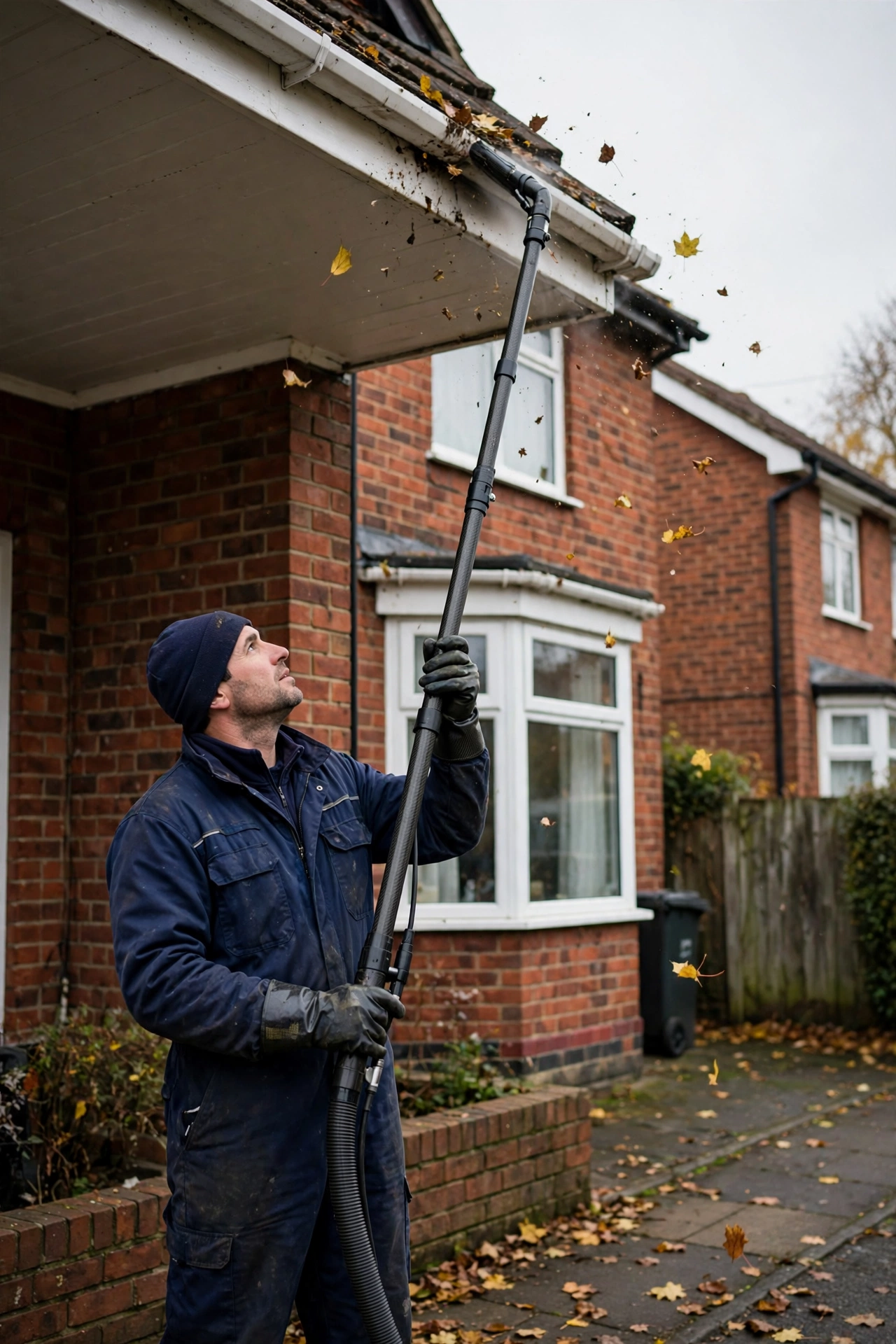
Gutters are the part of the house nobody looks at until something goes wrong. Then it is water running down the brickwork, a damp patch spreading on the bedroom wall, or a gutter so full of moss and leaves that it pours over the edge every time it rains. Cleaning them is one of the cheapest maintenance jobs a homeowner can pay for, and one of the easiest to put off until the repair bill is ten times bigger.
This guide sets out what gutter cleaning typically costs in the UK in 2026, worked out by house type so you can see where your own home fits, what a proper clean should include, how often to book one, and the honest answer on doing it yourself from a ladder.
What Gutter Cleaning Typically Costs by House Type
The guides checked for this article agree unusually well on the core price bands, which is rare for a trade cost. That agreement makes the ranges below a reliable starting point, but they are still typical ranges, not quotes. Your own price will depend on the height of the house, the length of guttering, how blocked it is, and how easy it is to reach.
For a small terraced house or a one to two bedroom flat, a standard clean typically costs £45 to £90. For a two to three bedroom semi-detached house, the most common UK home, expect £70 to £130, most often £80 to £120. For a three to four bedroom detached house, typical prices run from £90 to £180. For a three-storey house or a large detached home, the range rises to £150 to £300 or more, because the work is higher, the gutter runs are longer, and access is usually harder.
Put together, a typical standard job on a two to three bedroom house costs roughly £60 to £120. Bark puts its nationwide average at £85 with a typical range of £75 to £350, while MyJobQuote reports an average of around £125 with a typical range of £75 to £200. The difference between those two averages is a reminder of what the range means: Bark’s figure leans towards smaller, simpler jobs, while MyJobQuote’s includes larger and taller homes. Neither is wrong; they are measuring slightly different mixes of houses.
Per linear metre, the price typically runs from £4 to £12. An accessible run of guttering in good condition, with light build-up, is usually £4 to £5 per metre. A blocked, awkward or high run can reach £10 to £12 per metre. MyJobQuote puts the per-metre range at £5 to £10. The per-metre figure is worth asking for on your quote, because it lets you compare two quotes fairly: a cheap total on a long gutter run may simply mean the cleaner has priced fewer metres than your house actually has.
London and the South East cost more, as with most trades, typically around 20 to 30 percent above the UK average. A semi-detached house in London usually costs £100 to £150, and a detached house £150 to £230. MyJobQuote puts the London average at £120 to £180. If you live in the North, Wales or Scotland, expect prices towards the lower end of the national ranges above.
Two add-ons come up often enough to budget for. Clearing a blocked downpipe typically adds £10 to £30 per pipe, because it is a separate job from scooping the gutter itself and often needs rods or a pressure flush. Some firms charge by the hour instead of by the job, typically £18 to £25 per hour, with a day rate of £150 to £300 for larger properties. Most standard jobs take two to five hours from arrival to departure, including setting up, cleaning, checking the downpipes and clearing up.
What pushes a quote up is usually straightforward: height and access, length of guttering, and how much is in there. A two-storey semi with clear access all round is the cheapest shape of job. A three-storey house, a house with a conservatory blocking ladder access, or gutters full of compacted moss and silt will cost more, because the work is slower and needs different equipment. If a quote comes in far below the ranges above, ask what it leaves out: some very cheap quotes cover the front gutter only, or do not include the downpipes.
What a Proper Clean Should Include
A gutter clean that is worth paying for is more than someone scooping leaves out of the front gutter. Before you book, check that the quote covers the full job, and afterwards check that it was actually done.
The clean itself should cover every gutter run on the house, front, back and sides, not just the one you can see from the street. The cleaner removes leaves, moss, silt and debris by hand or with a gutter vacuum, then flushes the runs through with water to check that water actually flows to the downpipes. Flushing matters: a gutter that looks clean but still holds standing water has a fall problem, and that is something you want to know about.
Downpipes should be checked as part of the job, not treated as an extra you discover later. A blocked downpipe undoes the whole clean, because the water has nowhere to go. A proper clean includes running water down each downpipe and confirming it flows freely, and clearing a blockage if one is found, either included in the price or quoted separately before the work starts.
Brackets, joints and seals should be inspected while the cleaner is up there. Loose brackets, a leaking joint or a cracked seal are small problems when they are found early and expensive ones when they are not. A good cleaner will tell you what they found and what it would cost to fix, rather than just cleaning around it and leaving. Before and after photos are now standard with many firms, and they are worth asking for: they prove the work was done on runs you cannot see from the ground, and they give you a record of the condition of the gutters year on year.
Finally, the mess should be taken away. Leaves and silt scooped out of a gutter belong in the cleaner’s waste, not left on your patio or in your garden beds. If the quote does not mention waste removal, ask.
How Often Should Gutters Be Cleaned?
For most UK homes, twice a year is the right rhythm: once in late spring and once in late autumn, after the leaves have fallen. The autumn clean is the important one. A gutter full of autumn leaves going into winter is the one that overflows in the first heavy rain, and it is also the one that freezes, sags and pulls away from the fascia when the weight of wet leaves and ice builds up.
Some homes need cleaning more often. If your house sits under or near large trees, especially oaks, sycamores or conifers that shed all year, three cleans a year may be realistic, with one in mid-summer as well. If your gutters collect moss from the roof, which is common on older tiled roofs, the build-up can be faster than leaves alone, because moss washes down in every heavy rain. And if you have already had an overflow or a damp patch, do not wait for the next scheduled clean: get the gutters checked now, because the problem will not improve on its own.
The warning signs that a clean is overdue are easy to spot from the ground. Water overflowing the edge of the gutter during rain, instead of running to the downpipe. Plants or grass visibly growing out of the gutter. A damp patch or green staining on the wall below a gutter joint. Birds nesting in the gutter in spring. Any one of these means the gutter is already blocked or holding water, and booking a clean now is cheaper than repairing the damp it causes. Our guide to the types of damp in a house explains how overflowing gutters lead to penetrating damp, and how to tell it apart from condensation and rising damp.
DIY Gutter Cleaning: The Ladder Safety Reality
Cleaning your own gutters saves the cost of the job, and for a single-storey house with safe, level ground and a short run of guttering, it is a reasonable DIY task. For a two-storey house it is a different calculation, and it is worth being honest about it before you climb a ladder.
The risks are not abstract. Falls from height are one of the most common causes of serious DIY injury in the UK, and gutter cleaning combines the three things that make ladder work dangerous: working at height, leaning and reaching sideways, and doing it on ground that is often wet, soft or uneven. A ladder that is not on firm, level ground, a ladder leaned at the wrong angle, or a ladder that you climb above the safe working height can all go wrong quickly, and a fall from gutter height can break bones.
If you do clean your own gutters, the rules are simple and worth following exactly. Use a proper extending ladder, not a step ladder, and set it at the right angle: one unit out for every four units up. Never lean sideways from the ladder to reach further along the gutter; climb down and move it instead. Never work from a ladder in wet or windy conditions, or on soft ground without a ladder stabiliser or a second person footing the ladder. Wear gloves, because gutter debris hides sharp objects and bacteria, and eye protection, because the debris falls down as well as out. And never work alone at height: have someone else on the ground, both to steady the ladder and to call for help if something goes wrong.
For most two-storey homes, the honest maths is that a professional clean at £80 to £120, done twice a year, costs less than a single accident, and the professional brings a gutter vacuum that cleans from the ground without a ladder at all. That is the real comparison, not the cost of the clean against zero, but the cost of the clean against the cost and risk of doing it yourself at height.
There is one DIY job that is genuinely safe and worth doing between professional cleans: checking the gutters from the ground after heavy rain. If water is running over the edge, or a downpipe is not flowing, you have caught the problem early, and you can book a clean before the damp starts.
Are Gutter Guards Worth It?
Gutter guards, the mesh or brush inserts that sit in the gutter to keep leaves out, are sold as a way to stop cleaning altogether. They do not. What they do is change the problem: instead of leaves sitting in the gutter, leaves sit on top of the guard, and fine debris and moss still get through and build up underneath.
For a house under heavy tree cover, a good quality mesh guard can stretch the time between cleans, because it stops the big leaves that cause the worst blockages. For a house with little tree cover, it usually adds cost without adding much benefit, because there was not much to keep out in the first place. The cost of fitting guards varies widely with the system and the length of guttering, and it is usually quoted per job rather than per metre, so get a specific quote for your house rather than relying on a national average.
The other thing to know is that guards make cleaning harder when it is eventually needed. A brush insert has to come out to be cleaned, and a mesh guard has to be lifted to clear what has built up underneath. Some cleaners charge more for a guarded gutter for exactly that reason. If you do fit guards, choose a system that can be removed and refitted easily, and do not believe any claim that you will never need to clean your gutters again.
When Cleaning Is Not Enough
Sometimes a clean does not fix the problem, and it is worth knowing the difference before you pay for a second clean that will not help. If the gutter sags between brackets, if water pools in the middle of a run instead of flowing to the downpipe, or if joints leak even when the gutter is clear, the problem is the gutter itself, not what is in it. Sagging usually means the brackets have failed or the fascia board behind them has rotted. Pooling usually means the fall, the slight slope that carries water to the downpipe, has been lost, often because the gutter was fitted level or the brackets have slipped. Leaking joints usually mean the seals have perished, which happens with age on both plastic and metal gutters.
In those cases the right job is repair or replacement, not another clean. Our guide to gutter replacement cost in the UK sets out what replacement typically costs by material and house type, including when a repair is enough and when the whole run needs replacing. Fixing the underlying problem once is cheaper than paying to clean a gutter that cannot drain properly.
Frequently Asked Questions
How much does gutter cleaning cost in the UK?
A typical standard job on a two to three bedroom house costs roughly £60 to £120. By house type: a small terrace or one to two bedroom flat is typically £45 to £90, a two to three bedroom semi is £70 to £130, most often £80 to £120, a three to four bedroom detached house is £90 to £180, and a three-storey or large detached home is £150 to £300 or more. Per linear metre, prices typically run from £4 to £12. London and the South East are usually 20 to 30 percent above the UK average.
How often should gutters be cleaned?
Twice a year for most UK homes: once in late spring and once in late autumn, after the leaves have fallen. Homes under large trees or with mossy roofs may need three cleans a year. If you can see water overflowing the gutter, plants growing in it, or a damp patch on the wall below, book a clean now rather than waiting for the next scheduled one.
What should gutter cleaning include?
Every gutter run on the house, not just the front, plus flushing the runs through with water, checking that each downpipe flows freely, inspecting brackets, joints and seals, and taking the waste away. Before and after photos are worth asking for, so you can see the runs you cannot check from the ground.
Can I clean my own gutters?
For a single-storey house with safe, level ground, yes, with gloves and eye protection. For a two-storey house, the ladder risk is real: falls from gutter height are a common cause of serious DIY injury. A professional clean at £80 to £120, done twice a year, is usually the safer and cheaper option, and professionals can clean from the ground with a gutter vacuum.
Do gutter guards mean I never need to clean my gutters?
No. Guards keep out large leaves but fine debris and moss still get through and build up underneath, and guarded gutters can be harder and more expensive to clean. They can stretch the time between cleans on a house under heavy tree cover, but they do not remove the need for cleaning.
What if my gutters still overflow after cleaning?
If the gutter is clear but water still pools or overflows, the problem is usually the gutter itself: sagging brackets, a lost fall, a rotten fascia board or perished joint seals. That needs repair or replacement, not another clean.