
Where Is My Stopcock? How to Turn Off Your Water Supply
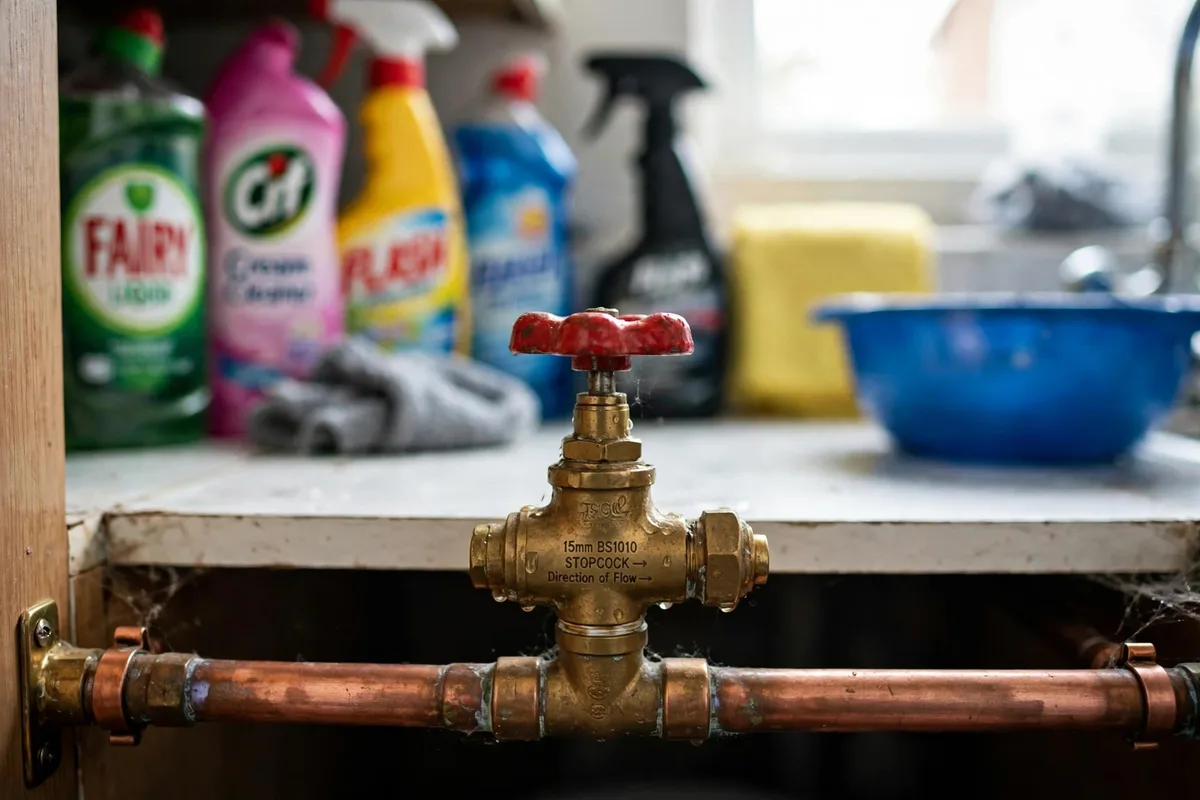
Every UK home has a stopcock, and most people only go looking for it when water is already pouring across the floor. That is the worst possible time to discover you do not know where it is, or that it has seized solid after ten years of never being turned. A stopcock, also called a stop tap or stop valve, is the valve that shuts off the cold water supply coming into your home. Turn it clockwise and the water stops. Turn it anticlockwise and it comes back. Knowing where yours is, and knowing it actually turns, is the single most useful piece of plumbing knowledge a homeowner can have. It is what stands between a small leak and a flooded kitchen.
This guide is short on purpose. There is not much to a stopcock, but there is a right way to find it, a right way to turn it, and a few mistakes worth avoiding. It also covers the outside stop tap, what to do when the valve will not move, and how to make sure everyone in the house knows where it is.
Where It Usually Is: By House Type
In most UK homes the internal stopcock is under the kitchen sink. That is the first place to look, and it is where you will find it in the majority of houses. It sits on the pipe where the cold water supply enters the property, usually a brass valve with a tap-style handle, sometimes with a red or blue handle, sometimes just plain brass. If it is not under the kitchen sink, work through the other common spots in this order.
Terraced and semi-detached houses. Check under the kitchen sink first, then the downstairs toilet or cloakroom, then under the stairs, then the airing cupboard. In older terraces the supply pipe often enters near the front of the house, so look under the floorboards near the front door as well. If the kitchen has been extended, the stopcock may still be in its original position, now hidden behind a cupboard or a panel in the old part of the house.
Detached houses. The same places apply, with two additions: the garage and the utility room. In larger detached houses the stopcock is sometimes in a cupboard near the front door or in a ground-floor cupboard that also holds the fuse box. If your house has a cellar, check there too, near where the pipe comes up through the floor.
Bungalows. The stopcock is usually under the kitchen sink or in the airing cupboard. Because there is no upstairs, the pipe entry point is easier to trace: follow the cold water pipe from where it enters the building and the valve will be on it.
Flats. Your flat should have its own stopcock where the water supply enters the flat, often under the kitchen sink, in a hallway cupboard, or in the bathroom. Some blocks also have a communal stop tap in a shared cupboard or corridor that supplies several flats. If you cannot find one inside your flat, ask your landlord or managing agent. Do not turn off a communal stop tap without checking with your neighbours first, because it may shut off their water too.
Period homes. In Victorian and Edwardian houses the stopcock is often under the floorboards near the front door, or in a cupboard that was once a scullery. It may be an older brass gate valve rather than a modern lever valve, and it may not have been touched for decades, which makes the seized-stopcock section below especially relevant.
If you still cannot find it after checking every spot, trace the pipe. Find where the cold water main enters the building from the street, usually at the front, and follow the pipe inside. The stopcock is fitted on that pipe, close to where it enters. As a last resort, ask the previous owner, your landlord, or your water supplier, who will have a record of the external stop tap location.
Internal vs External Stopcock: Which One to Use
Your property has two stop taps, and they do different jobs.
The internal stopcock is yours. It controls the cold water supply inside your property. This is the one to use for a leak or burst pipe inside the house, and before any plumbing work such as fixing a tap or a toilet. It is the valve this guide is mainly about.
The external stop tap sits outside, usually under a small metal or plastic cover in the pavement, driveway, front garden or grass verge near your boundary. If you have a water meter, the external tap is generally in the same pit or chamber as the meter. The external tap belongs to your water supplier, and you may need their permission to operate it, even in an emergency. It should only be used by a qualified plumber or by the water supplier, and if you do turn it off in an emergency you may need to seek permission to turn it back on. Use the internal stopcock first whenever you can.
There is one important exception to know about. In older terraced properties, one outside stop tap can control the water supply of several properties on a shared supply. If you think this could be the case at your property, speak to your neighbours before turning off their supply. The same applies to flats on a communal tap.
To turn the water off at the internal stopcock, turn it clockwise until it stops. It may take a couple of minutes for the water to stop completely, because the pipes still hold water. Open the cold kitchen tap to check the flow has stopped and to drain the remaining water from the pipes. To turn the water back on, turn the stopcock anticlockwise. Turn it on and off slowly, and never force it. If the valve has a lever rather than a tap handle, turn the lever so it sits across the pipe to close it, and in line with the pipe to open it. Some plastic external valves need only a quarter turn.
In a leak emergency, do three things in order. First, turn off the internal stopcock. Second, open all the cold taps and flush the toilets to drain the system. Third, if water is near light fittings or sockets, turn off the electricity at the fuse box, and do not touch electrics that are wet. If hot water pipes are affected, turn off the boiler or immersion heater as well, and call a plumber as soon as you can. Our guide to how to stop frozen pipes covers the same first-ten-minutes routine for a burst pipe in winter.
If It Is Seized: What to Try, and What Never to Force
Stopcocks seize because they are almost never used. A valve that has sat untouched for five or ten years can refuse to move, and this is the most common reason a homeowner cannot turn the water off in an emergency. Do not reach for a wrench and force it. Forcing a seized stopcock can snap the spindle, crack the valve body, or break the pipe, and a small leak becomes a major one.
Try this instead. First, spray the spindle and the valve body with a penetrating oil such as WD-40 and leave it for fifteen to thirty minutes. Then try turning the handle gently back and forth, a quarter turn each way, to work it free. If it starts to move, keep working it slowly until it turns freely, then turn it fully off and fully on two or three times to free the mechanism. If it will not move at all after the oil and gentle working, stop. The valve needs replacing, and that is a plumber’s job.
While you wait for the plumber, you may not be stuck. Most toilets, basins, washing machines and dishwashers have a small isolation valve on the pipe feeding them. Turn the slot a quarter turn with a flat screwdriver so it sits across the pipe, and that shuts off water to that appliance only. This is enough for most small jobs and for containing a leak from one appliance. If there is no isolation valve and the stopcock will not turn, the external stop tap is the remaining option, but remember that it belongs to the water supplier and you should call them or a plumber rather than trying to force it open yourself. You may need a special stop tap key to reach it, and a qualified plumber will have one.
Once a seized stopcock has been replaced, make sure the new one is a modern lever valve or a full-bore valve rather than another old gate valve. Lever valves are easier to turn in an emergency, especially with wet hands, and they are less likely to seize. This is also the moment to check whether your home has isolation valves on the main appliances. If it does not, ask the plumber to fit them while they are there. They cost little and they save a full-house shut-off every time a tap needs changing.
Label It for the Household
Finding the stopcock once is not enough. Everyone in the house needs to know where it is, including teenagers, guests, and anyone house-sitting while you are away. In a real emergency you may not be home, and the person who is home should not have to search.
Label it clearly. A luggage tag or a strip of tape on the pipe next to the valve, marked “STOPCOCK – TURN CLOCKWISE TO TURN OFF WATER”, is enough. Put a note on the inside of the cupboard door under the kitchen sink with the same words. If your stopcock is under the floorboards, mark the floorboard or leave a note where it will be seen. Tell every adult in the house where it is and show them how to turn it, and put the location in the house information you leave for guests or tenants.
Then test it twice a year. Turn the stopcock off, check the water stops, and turn it back on. This takes two minutes and it is the only way to know it will work when you need it. A valve that is turned twice a year does not seize. Put it in the same routine as testing your smoke alarms, and it will never catch you out.
It is worth doing the same check before any plumbing job in the house. Before you fix a dripping tap, before you open a cistern to fix a running toilet, and before you start any work on the supply, turn the stopcock off first and confirm the water has stopped. If your water pressure is low, the stopcock is also the first thing to check, because a stopcock that is only partly open restricts the flow to the whole house. Make sure it is fully open, turned anticlockwise until it stops, before you look for any other cause.
FAQ
Where is the stopcock in most UK houses?
Under the kitchen sink. If it is not there, check the downstairs toilet, under the stairs, the airing cupboard, the garage or utility room, and under the floorboards near the front door. In flats it may be in a hallway cupboard, and some blocks have a communal stop tap.
Which way do I turn a stopcock to turn the water off?
Clockwise to close it, anticlockwise to open it. Turn it slowly and never force it. If it has a lever, turn the lever so it sits across the pipe to close it. It may take a couple of minutes for the water to stop completely while the pipes drain.
What is the difference between a stopcock and an isolation valve?
A stopcock shuts off the water supply to the whole property. An isolation valve shuts off water to one tap or appliance only, and sits on the pipe feeding that appliance. Use the isolation valve for a single tap or toilet job, and the stopcock for emergencies and bigger work.
What should I do if my stopcock will not turn?
Do not force it with a wrench. Spray penetrating oil on the spindle, wait fifteen to thirty minutes, then work the handle gently back and forth. If it still will not move, use the isolation valve on the appliance concerned, and call a plumber to replace the stopcock.
Can I turn off the outside stop tap myself?
The external stop tap belongs to your water supplier, and you may need their permission to operate it. In a serious emergency you can use it, but call your water company or a plumber rather than forcing it, and remember that on a shared supply it may shut off your neighbours’ water too.
How often should I check my stopcock?
Twice a year. Turn it off, confirm the water stops, and turn it back on. A valve that is turned regularly does not seize, and you will know it works before you ever need it in an emergency.
Who is responsible for fixing a broken stopcock?
The internal stopcock is your responsibility as the homeowner, and a plumber can replace it. The external stop tap is the water supplier’s responsibility, so contact them if it is damaged, buried or will not turn.