
Boiler Service Cost UK: What You Pay and What It Includes
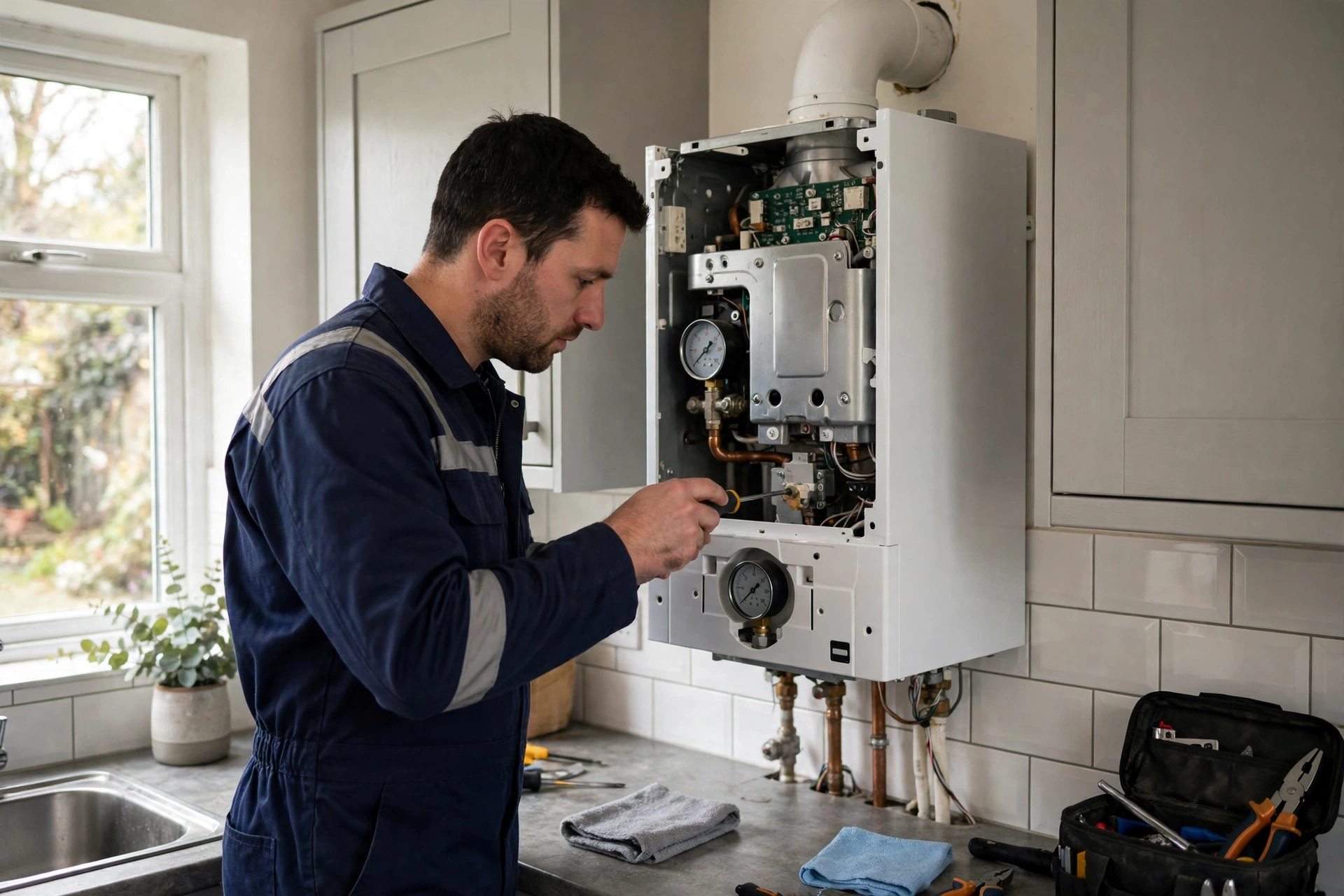
A boiler service is the one job on a UK home that almost everyone knows they should book and almost everyone puts off. It is not dramatic, it does not change the look of a room, and when it goes well nothing visibly changes at all. That is exactly why it gets delayed until the first cold week of October, when every engineer in the area is booked solid and the price has gone up.
The cost of a boiler service in the UK is not a mystery, and it is not the same for every home. What you pay depends on the type of boiler, where you live, who does the work, and whether you book a one-off visit or a cover plan. This guide sets out the typical prices, what a proper service actually includes, how a service compares with a repair and with a monthly cover plan, what the law says about who is allowed to touch a gas boiler, the best time of year to book, and the warning signs that mean a service alone will not save your boiler.
Typical Service Price
For a standard gas boiler, a one-off service by an independent local engineer typically costs between £60 and £120, with most UK guides converging on a typical range of £80 to £120 and an average of around £100. Which?, as quoted in the cost guides checked in November 2026, puts the range at £70 to £110 with an average of about £79. Those figures are for a straightforward annual service on a working boiler, not a repair, and they assume the engineer can reach the boiler without scaffolding or special access.
National providers charge more. British Gas lists a one-off gas boiler service at £119, or £109 for members, and other national firms typically quote £90 to £120 or more, with some sources going up to £130 to £200 for a service booked through a large company. The premium buys a branded engineer and a booking system, not a different service; the checks themselves are the same ones a local Gas Safe engineer performs. Whether the premium is worth it is a judgement call, but it is worth knowing that the work itself is standardised, so the cheapest qualified local quote is usually the same job done properly.
Prices vary by boiler type. An oil boiler service typically costs £90 to £150 and must be done by an OFTEC-registered engineer, not a Gas Safe engineer, because oil is a different registration. An electric boiler service typically costs £60 to £110, and an LPG boiler service typically costs £90 to £120. The oil premium reflects the extra work involved: an oil service includes replacing the nozzle and the oil filter, which a gas service does not, and it usually takes longer.
Location matters as much as boiler type. London and the South East typically cost £100 to £160, around 15 to 25 per cent above the national average, while the North East and Wales are typically the cheapest, at around £65 to £110. If you live in London and are quoted £140, that is not necessarily a bad price; if you live in the North East and are quoted £140 for a standard gas service, it is worth getting a second quote.
A service takes about an hour for a gas boiler, and one to one and a half hours for a gas system boiler or a combi that needs more checks. Oil and system boilers take longer, which is part of why they cost more. If an engineer is in and out in twenty minutes, something has been skipped, and the next section explains what should have happened in that hour.
Landlords pay a different price because they are buying two things at once. A landlord service combined with a Gas Safety Certificate, known as a CP12, typically costs £80 to £150. The certificate alone typically costs £60 to £90. Landlords are legally required to have the annual gas safety check, so for them the service and the certificate are usually booked together, and the combined price is the figure that matters.
What a Service Includes
A proper boiler service is a checklist, not a glance. The engineer should start with a visual inspection of the boiler and the flue, inside and outside the house. The flue is the pipe that carries exhaust gases out of the building, and it is checked for damage, blockages, and correct fitting, because a damaged flue is a carbon monoxide risk. The boiler casing is removed and the inside is inspected for signs of leaks, corrosion, or soot, which can indicate incomplete combustion.
The burner and the heat exchanger are the working heart of the boiler. The engineer cleans the burner and checks the heat exchanger for debris and damage, because a dirty burner wastes gas and a damaged heat exchanger can leak. On a condensing boiler, the condensate trap is cleaned and checked, since a blocked condensate pipe is one of the most common causes of a boiler stopping in cold weather. The ignition system, the electrodes and the flame sensor are checked and cleaned, and the gas pressure and flow are tested against the manufacturer’s specification.
The controls are tested next. The engineer checks that the thermostat, the timer or programmer, and any thermostatic radiator valves are communicating with the boiler correctly, and that the boiler fires up and shuts down as it should. The safety devices are tested too: the pressure relief valve, the high-limit thermostat, and the flame failure device, which shuts the gas off if the flame goes out. These are the parts that stand between a working boiler and a dangerous one, and they are the reason a service is not a job for a general handyman.
The system pressure is checked and topped up if needed, and the engineer checks for leaks around the boiler, the pipework, and the radiators. On a system with a sealed heating circuit, the expansion vessel pressure is checked, because a failed expansion vessel is a common cause of a boiler that keeps losing pressure. The engineer should also check the flue gas with an analyser, measuring the carbon monoxide and carbon dioxide levels in the exhaust. A flue gas analyser reading is the objective proof that the boiler is burning gas cleanly and safely, and a service that does not include one is incomplete.
When the work is done, the engineer should give you a service report, listing what was checked, the flue gas readings, and any advisories. Keep that report. It is the record that the service happened, it is useful if you sell the house, and it is what a manufacturer or a warranty provider will ask for if you ever claim. Some manufacturers require an annual service by a qualified engineer to keep the warranty valid, so a missed year can cost far more than the price of the service itself.
One thing a service does not include is a repair. If the engineer finds a worn part, a leaking seal, or a faulty valve, fixing it is a separate job with a separate charge, and the engineer should tell you the cost before doing the work. A service is a check and a clean, not a fix, and that distinction matters when you compare the price of a service with the price of a repair.
Service vs Repair vs Cover Plan
A service, a repair, and a cover plan are three different products, and confusing them is how homeowners end up overpaying. A service is preventive: it keeps a working boiler working, it is booked once a year, and it costs roughly £80 to £120. A repair is reactive: something has broken, the boiler has stopped, and you are paying for parts and labour to fix a specific fault. A repair call-out typically starts at £75 to £100 for the visit alone, before parts, and a common repair such as a replacement pump or diverter valve can run to several hundred pounds. A cover plan is insurance: you pay a monthly fee, typically £8 to £18 a month, and the provider covers the cost of the annual service and of repairs when they happen, usually with a call-out promise.
The Which? figures quoted in the cost guides checked in November 2026 put the average cover plan at about £183 a year, with some households paying up to £300, and prices often rising after the first year. At £183 a year, a cover plan costs roughly double the price of a one-off annual service. Whether that is good value depends on the age and condition of your boiler. For a new boiler under warranty, the manufacturer already covers repairs, so a cover plan is mostly paying for the service twice over. For a boiler that is ten years old or more, with a history of faults, a cover plan can pay for itself with a single repair, provided the plan covers the parts that fail and does not exclude pre-existing faults.
The comparison that matters is the one over three years, not one year. Three one-off services at £100 each cost £300. Three years of a cover plan at £15 a month cost £540. For the cover plan to win, the boiler has to need at least £240 of repairs in those three years that the plan actually pays for. That is possible on an old boiler, and unlikely on a young one. Cover plans also have exclusions worth reading: many do not cover the cost of replacing the boiler itself, many have a waiting period of a month or more before you can claim, and some exclude faults that existed before the plan started. A plan that will not pay out on the fault you actually have is worse than no plan at all.
There is also a middle option that many homeowners miss. Some local engineers offer their own service plan, a fixed annual price that includes the service and a priority call-out if something breaks, without the exclusions of a national plan. These are usually cheaper than a national cover plan and the engineer already knows your boiler. If your boiler is ageing and you want peace of mind, ask your local engineer what they offer before signing up with a national provider.
The honest summary is this: a young boiler needs a service, not a plan. An old boiler that has already needed repairs needs a service and a hard look at whether a plan, or a replacement, is the better spend. A boiler that needs a repair needs a repair, not a service, because servicing a broken boiler does not fix it.
Gas Safe: The Legal Bit
Anyone who works on a gas boiler in the UK must be Gas Safe registered. That is not a recommendation, it is the law, and it applies to servicing as well as to installation and repair. A Gas Safe registered engineer carries an ID card with a photograph, a licence number, and a list of the categories of gas work they are qualified to do. Ask to see it, and check the number on the Gas Safe Register website or by phone. An engineer who cannot produce a card, or whose card does not cover boilers, should not be touching your boiler, however cheap the quote.
The distinction matters because a general handyman or a plumber who is not Gas Safe registered cannot legally service a gas boiler, and a service done by someone unregistered is not a service at all in the eyes of a manufacturer, an insurer, or a court. If the boiler later fails, or worse, if there is a gas leak or a carbon monoxide incident, an unregistered service is no defence, and it can invalidate a warranty and complicate an insurance claim. The £20 or £30 saved by using an unregistered worker is the most expensive saving a homeowner can make.
Oil boilers are the exception, and the exception proves the rule. Oil work is covered by OFTEC registration, not Gas Safe, so an oil boiler service must be done by an OFTEC-registered engineer. Electric boilers have no gas safety requirement, but they should still be serviced by a qualified heating engineer or electrician, because the electrical and water sides of the system both need checking.
For landlords, the law goes further. A landlord must have every gas appliance in a rented property checked by a Gas Safe registered engineer once a year, and must give the tenant a copy of the Gas Safety Certificate, the CP12, within 28 days of the check. The certificate is the record of that check, and the annual service is usually done at the same visit, which is why the combined landlord price of £80 to £150 is the figure landlords should budget for. Our guide to the gas safety certificate explains the landlord rules in full, including what happens if the check is missed.
Homeowners who live in their own home are not legally required to have an annual service, but the practical requirements are nearly as strong. Most boiler manufacturers require an annual service to keep the warranty valid, most home insurers expect one, and a boiler that has not been serviced for years is far more likely to fail in the middle of winter, when an emergency call-out costs the most. The legal position for homeowners is permissive; the financial position is not.
When to Book (Before Winter)
The cheapest time to book a boiler service is in the summer, roughly May to August, when engineers have spare capacity and some offer discounts to fill their diaries. The most expensive and most difficult time is October to February, when the first cold snap brings a rush of breakdowns and every engineer is fully booked. A service booked in June costs the same job at a lower price and with a choice of dates; a service booked in November may cost more, may be weeks away, and may be competing with emergency breakdowns for the engineer’s time.
The sensible rhythm is to book the service in late summer, after the heating has been off for a few months and before it is needed again. That way, if the service finds a problem, there is time to fix it before the cold arrives, and the heating can be tested properly while the weather is still mild. It also means the boiler has been checked before the season when it works hardest, which is when faults are most likely to appear and most expensive to fix.
If you have missed the summer window, book as soon as you can rather than waiting for the next one. A service in October is still better than no service at all, and it is still cheaper than an emergency repair in January. The worst time to book is the week the boiler stops working, because then you are not booking a service, you are booking a repair, at emergency rates, in a queue behind everyone else whose boiler stopped in the same cold snap.
One practical tip: book the next service at the end of the current one. Many engineers will diary the following year on the spot, and a standing annual appointment in the summer is the simplest way to never pay winter prices or join the autumn queue again.
Signs a Service Will Not Save It
A service keeps a healthy boiler healthy. It does not rescue a boiler that is at the end of its life, and knowing the difference saves you the price of a service on a boiler that needs replacing. The clearest sign is age combined with a pattern of breakdowns. A boiler over 12 to 15 years old that has needed two or three repairs in the last two years is telling you that its parts are wearing out together, and the next repair is a matter of time, not chance. At that point the money spent on repeated repairs, plus the cost of services on a failing boiler, is often better put towards a replacement.
Frequent loss of pressure is another warning sign. A boiler that needs topping up every few days has a leak or a failed expansion vessel, and while both can be repaired, a boiler that keeps losing pressure after the obvious fixes is often showing its age. The same applies to a boiler that makes banging or kettling noises, which usually means limescale has built up inside the heat exchanger. In hard-water areas this can sometimes be treated with a system flush, but on an old boiler the scale is often a symptom of a heat exchanger that is coming to the end of its life.
Yellow or orange flames, instead of a crisp blue flame, are a safety warning, not a maintenance issue. A yellow flame can indicate incomplete combustion and carbon monoxide risk, and it needs an engineer immediately, not a routine service appointment. The same urgency applies to any smell of gas, any black soot marks around the boiler, or a carbon monoxide alarm going off. In those cases, turn the boiler off, ventilate the room, and call the Gas Emergency Service on 0800 111 999, then your Gas Safe engineer. Do not wait for a scheduled service.
Rising energy bills without a change in use can also point to a boiler that is no longer efficient. A modern condensing boiler runs at over 90 per cent efficiency; an old non-condensing boiler may run at 70 per cent or less, which means nearly a third of the gas you pay for is wasted. A service will not restore that lost efficiency, because the design of the boiler itself is the limitation. If your boiler is old, inefficient, and expensive to run, the honest calculation is not the cost of the next service, it is the cost of the next five years of gas bills plus repairs, compared with the cost of a new boiler. Our guide to the types of boiler explained sets out the options if you reach that point.
Finally, a boiler that keeps tripping the electrics, that produces lukewarm water despite a high thermostat setting, or that heats some radiators and not others even after balancing the radiators may have a fault in the pump, the diverter valve, or the controls. Those are repair jobs, and a service will identify them but not fix them. Book the service, let the engineer diagnose the fault, and then decide whether the repair is worth doing or whether the boiler has earned its retirement.
FAQ
How much does a boiler service cost in the UK?
A one-off gas boiler service typically costs £60 to £120, with most guides converging on £80 to £120 and an average of around £100. British Gas charges £119, or £109 for members. Oil boilers typically cost £90 to £150, electric boilers £60 to £110, and LPG boilers £90 to £120. Prices are typically 15 to 25 per cent higher in London and the South East.
How long does a boiler service take?
About an hour for a standard gas boiler, and one to one and a half hours for a gas system boiler or a combi that needs more checks. Oil and system boilers take longer. If an engineer is finished in twenty minutes, something has been skipped.
Do I legally need a boiler service every year?
Homeowners are not legally required to service their boiler, but most manufacturers require an annual service to keep the warranty valid, and most insurers expect one. Landlords are legally required to have a gas safety check every year, and the service is usually done at the same visit.
Can anyone service a boiler, or does it have to be a Gas Safe engineer?
A gas boiler must be serviced by a Gas Safe registered engineer, by law. Oil boilers must be serviced by an OFTEC-registered engineer. Always ask to see the engineer’s ID card and check the number on the Gas Safe Register.
Is a boiler cover plan worth it?
It depends on the age of your boiler. A cover plan typically costs £8 to £18 a month, or about £183 a year on average, which is roughly double the cost of a one-off annual service. For a new boiler under warranty, a plan is usually poor value. For a boiler over ten years old with a history of faults, it can pay for itself with a single repair, provided the plan covers the parts that fail.
When is the best time to book a boiler service?
Late summer, roughly May to August, is the cheapest and easiest time, when engineers have spare capacity. October to February is the most expensive and the hardest time to get a booking, because the first cold snap brings a rush of breakdowns.
What happens if the service finds a problem?
The engineer should tell you what the problem is and what it will cost to fix before doing any repair work. A service is a check and a clean, not a fix, so repairs are charged separately. Keep the service report, as it is the record of what was checked and what was advised.