
How to Stop Pigeons Nesting on Your Roof: A UK Homeowner’s Guide
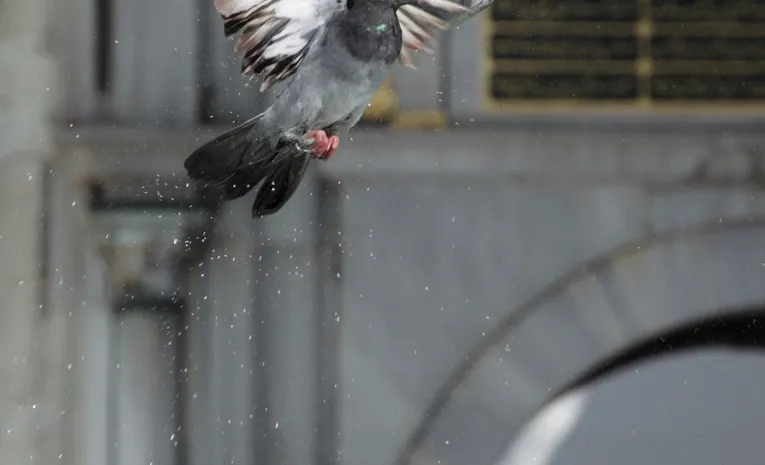
Pigeons roosting on a roof are more than just a nuisance. Left unchecked, droppings corrode roof tiles, block gutters, and can even damage solar panels, while the noise and mess frustrate most homeowners fairly quickly. The good news is that stopping pigeons nesting does not automatically mean calling in a professional, though there are important legal points worth understanding before you start.
This guide covers the legal position on removing pigeon nests in the UK, the most effective DIY deterrent methods, and when the job genuinely needs a professional.
Is It Illegal to Remove a Pigeon Nest in the UK?
In short: under the Wildlife and Countryside Act 1981, it is an offence to intentionally damage, destroy or take an active bird’s nest while it is being built or in use, including eggs or chicks. Feral pigeons are covered by this protection like any other wild bird, even though they are widely considered a pest species.
This does not mean pigeons cannot be deterred or controlled at all. Preventative measures such as netting or spikes, fitted before a nest is established, are entirely legal, and an empty, disused nest can be removed once you have confirmed no eggs or chicks remain. If you are ever unsure whether a nest is active, it is safest to wait or seek advice rather than risk removing one that is still in use.
Why Pigeons Choose Your Roof
Pigeons are drawn to roofs, chimneys and roof voids because they offer shelter, height away from ground predators, and flat or sheltered ledges that mimic the cliff faces their wild ancestors nested on. A nearby food source, whether a bird feeder, discarded food, or an accessible bin, makes a property considerably more attractive to a settling flock.
DIY Deterrent Methods
| Method | Best For | Effectiveness | Typical Cost |
|---|---|---|---|
| Bird spikes | Ledges, ridges, gutters, flat surfaces | High, when properly installed | £15 to £40 per pack |
| Bird netting | Larger roof areas, solar panels, balconies | Very high | £30 to £100+ depending on area covered |
| Visual deterrents (decoys, reflective tape) | Short-term or supplementary use | Low to moderate, pigeons adapt quickly | £10 to £30 |
| Sound deterrents | Larger or commercial spaces | Moderate, less practical for domestic use | £30 to £80 |
Bird Spikes
Spikes are one of the most reliable domestic solutions, physically preventing pigeons from landing on ledges, ridge tiles, gutters and chimney stacks without harming them. They are widely available in strips that can be cut to fit and fixed with adhesive or screws.
Bird Netting
For larger or flatter areas, particularly where solar panels are installed, netting creates a complete physical barrier that stops pigeons accessing the space entirely. It is more involved to fit correctly than spikes, and for anything beyond a small, easily accessible area, professional installation is usually worth the cost to ensure it is fitted safely and does not itself become a hazard to birds.
Visual and Sound Deterrents
Decoy birds of prey, reflective tape, and ultrasonic devices can help as a supplementary measure, but pigeons are intelligent birds that habituate to a static deterrent fairly quickly. These work best combined with a physical barrier rather than relied on alone.
Protecting Solar Panels from Pigeons
Pigeons are particularly drawn to the sheltered gap beneath solar panels, which offers protection from weather and predators. Purpose-made solar panel bird proofing, mesh or skirting fitted around the panel edges, closes off this gap and is one of the most effective long-term solutions for homes with rooftop solar.
Cleaning Up Safely After Pigeons
Pigeon droppings, known as guano, can carry health risks and should be handled carefully. Wear gloves and a suitable face mask, avoid dry-sweeping which can release airborne particles, and dampen the area first before clearing it away. For large accumulations, particularly in a loft or roof void, professional cleaning is the safer option.
What NOT to Do
- Do not remove an active nest containing eggs or chicks. This is an offence under the Wildlife and Countryside Act 1981.
- Avoid relying on spices such as chilli powder or pepper as a repellent. These wash away quickly in UK weather and offer little real protection.
- Do not attempt work on a steep or high roof yourself. Falls from height are a leading cause of DIY injury, and this is exactly the kind of job where a professional is worth the cost.
- Avoid poisoning or harming pigeons in any way, which is both illegal and ineffective at solving the underlying problem.
DIY Cost vs Hiring a Pest Control Professional
| Job | DIY Cost | Professional Cost (UK average) |
|---|---|---|
| Bird spikes, small area (ledges, single ridge) | £15 to £40 | £80 to £150 |
| Netting, small balcony or single roof section | £30 to £80 | £150 to £400 |
| Full roof netting installation | Not recommended DIY | £300 to £800+ |
| Solar panel bird proofing | £50 to £150 (kits) | £150 to £350 |
| Guano clearance (loft or roof void) | Not recommended DIY for large amounts | £150 to £400 |
When You Legally Must Call a Professional
Where a nest is active and needs to be relocated rather than left in place, or where an infestation is severe and involves accessing a roof void or loft, a licensed pest control professional is the appropriate route. They are equipped to assess whether a nest is active, work at height safely, and ensure any removal is carried out within the law.
Frequently Asked Questions
Do pigeon spikes actually work?
Yes, when installed correctly across every ledge or flat surface a pigeon could land on. Gaps in coverage are the most common reason spikes fail, since pigeons will simply move to an unprotected spot nearby.
How do I stop pigeons nesting under solar panels?
Fit purpose-made mesh or skirting around the edges of the panels to close off the sheltered gap underneath, which is what makes this spot so attractive to nesting pigeons in the first place.
Is it cruel to use bird spikes?
Properly installed bird spikes are designed to be a humane deterrent. They prevent pigeons from landing comfortably without causing injury, unlike some other historic deterrent methods that are no longer considered acceptable.
Can I remove an old, empty pigeon nest myself?
Yes, provided you have confirmed the nest is genuinely disused, with no eggs or chicks present. If there is any doubt about whether the nest is still active, it is best to leave it and seek advice.
Related Reading
About the author: This guide was written by the Routen House editorial team, referencing UK wildlife protection law and standard pest control practice.