Chimney Sweep Cost UK: How Much a Sweep Costs and How Often You Need One
Chimney Sweep Cost UK: How Much a Sweep Costs and How Often You Need One
A chimney sweep is one of the cheapest pieces of home maintenance, and one of the easiest to put off. Nothing looks wrong from the ground, the fire still lights, and the bill for skipping it never arrives in the post. The bill that does arrive, when it arrives at all, is far larger: a chimney fire, a room full of smoke, or a home insurance claim refused because nobody can prove the chimney was swept. That is why this guide covers cost and frequency together. The price of a single sweep is small. The price of getting the interval wrong is not.
The short answer is that a standard chimney sweep in the UK typically costs around £90, with most standard jobs falling between £75 and £150 depending on the appliance, the condition of the chimney and where you live. London and the South East sit at the top of the range. A second chimney, a chimney not swept for years, a bird’s nest or a CCTV survey all add to the bill, and those extras are where quotes start to diverge. The sections below give the cost by appliance, the sweeping frequency by fuel, what a proper sweep should actually include, what the certificate is for, the extras that cost more, and the honest case for and against doing it yourself. All prices are typical UK ranges from cost guides checked in October 2026, given so you can sense-check a quote. They are not a price for your chimney.
Average Sweep Cost: Standard, Stove and London Premium
Checkatrade’s cost guide, updated in September 2026, puts the average chimney sweeping cost in the UK at £90, with a range of £75 to £250 depending on chimney type and location. MyJobQuote’s guide, dated 20 October 2026 and based on real quotes from its platform, puts the average slightly higher, at around £105, with professional chimney cleaning typically costing £80 to £150 and most standard jobs costing £90 to £120. The difference between the two averages is not a contradiction. It is the range itself: a straightforward sweep of a well-maintained open fire in a small town costs less than the same job in London, and both guides agree on that pattern.
By appliance, the picture is consistent across both guides. An open fire chimney sweep typically costs £75 to £110 on Checkatrade’s figures, or £80 to £120 on MyJobQuote’s, with an average of about £90. A gas fireplace chimney sweep is usually a little cheaper, at £65 to £105 with an average of about £85, because a gas flue generally carries less soot than a solid-fuel chimney, though it still needs sweeping where the flue is designed to be swept. A lined stove chimney typically costs £90 to £140, and an unlined stove chimney £110 to £150, because an unlined chimney is harder to clean thoroughly and may need more passes. A job in London typically costs about £105 for a standard sweep on Checkatrade’s figures, and London and South East jobs generally land at or above the upper end of any national range on MyJobQuote’s figures.
Most sweeps charge a fixed rate per visit rather than an hourly rate, and a standard sweep usually takes between 45 minutes and 2 hours. The time depends on how long it is since the last sweep, how much soot and tar has built up, and whether the sweep needs to work from the roof as well as from the fireplace. A chimney that has not been swept for more than two years costs more: Checkatrade puts one chimney last cleaned over two years ago at £80 to £260 with an average of £100, and two chimneys in the same position at £130 to £310 with an average of £150. That premium is not a penalty for lateness. It reflects real extra work, because heavy deposits take longer to clear and are more likely to hide a problem that needs reporting.
What pushes a standard job above the average is usually access or condition, not the sweep’s hourly rate. A chimney that can only be reached from a steep or high roof, a flue with awkward bends, a stove with a baffle plate that has to be removed and refitted, or a chimney in a property a long way from the sweep’s base will all cost more. Travel is a real factor for a trade that is often a one-person business: a sweep who has to drive 30 miles each way will either charge for it or decline the job. Getting two or three local quotes for the same job, and asking each sweep what the price includes, is a better use of time than hunting for the cheapest headline figure, because the cheapest sweep who does not issue a certificate may be the most expensive one in the end.
| Job | Typical UK cost | Notes |
|---|---|---|
| Standard chimney sweep, average | About £90 to £105 | Checkatrade average £90; MyJobQuote average about £105 |
| Open fire chimney sweep | £75 to £120 | Most standard jobs fall in this band |
| Gas fireplace chimney sweep | £65 to £105 | Average about £85; flue must be designed for sweeping |
| Lined stove chimney sweep | £90 to £140 | Stove baffles may need removing and refitting |
| Unlined stove chimney sweep | £110 to £150 | Harder to clean thoroughly; expect extra passes |
| Sweep in London | About £105 and up | London and the South East sit at the top of national ranges |
| One chimney, not swept for over 2 years | £80 to £260, average £100 | Extra build-up means extra time |
| Two chimneys, not swept for over 2 years | £130 to £310, average £150 | Per-visit price for both, not per chimney at full rate |
How Often by Fuel: The NACS and HETAS Table
How often you sweep depends mainly on what you burn and how often you use the fire or stove. The National Association of Chimney Sweeps (NACS) publishes guidance frequencies, and the solid fuel safety group HETAS gives similar advice. The table below follows the NACS guidance, which is the version most UK sweeps will quote you, with the HETAS difference noted where it matters. These are guidance frequencies, not a legal schedule, and your sweep may advise more frequent sweeping if you burn wet wood, use the appliance every day through winter, or have a flue that is known to tar up quickly.
| Fuel and appliance | How often to sweep | Why |
|---|---|---|
| Wood, including wood-burning stoves and open fires | Quarterly when in use | Wood produces creosote and tar, especially if it is wet or unseasoned, and deposits build up fast with regular use |
| Bituminous coal (house coal) | Quarterly when in use | Coal produces heavy soot and sulphurous deposits that need regular clearing |
| Smokeless fuel | At least once a year | Smokeless fuel burns cleaner than wood or house coal, so deposits build up more slowly |
| Oil appliance flue | Once a year | Oil flues need an annual sweep where they are designed to be swept, as part of the annual service |
| Gas appliance flue | Once a year | Gas flues carry less soot, but still need an annual check and sweep where designed for it |
Two points in that table catch people out. The first is the word “quarterly when in use” for wood. It does not mean four sweeps every calendar year for a stove you light on a handful of winter weekends. It means that if you burn wood regularly through the heating season, the chimney should be swept at intervals during that season, not just once in the autumn. A stove used every evening from October to March will have built up a serious layer of creosote by January, and waiting until the following autumn to clear it leaves a flammable deposit in the flue all summer. In practice, many regular wood burners sweep twice a year, once before the heating season and once during it, and daily users follow the quarterly guidance properly. Ask your sweep what interval fits your actual use, and take their answer over a generic annual rule.
The second point is that HETAS recommends sweeping at least twice a year when burning wood or coal, which is less frequent than the NACS quarterly guidance for regular use. The two are not in conflict. Both agree that annual sweeping is the minimum for any solid fuel, and both agree that regular wood and coal use needs more than one sweep a year. The difference is in how they express the upper end of regular use. What matters for your home is not which body’s wording you prefer, but that you do not treat a wood burner like a smokeless-fuel fire and sweep it once a year regardless of use. If you are unsure which category your use falls into, the honest answer is to sweep before winter, use the fire through the season, and ask the sweep at that visit when they would like to see it again.
There is also a timing point worth planning around. The best time to book a sweep is late summer or early autumn, before the heating season starts, when sweeps have availability and you are not competing with everyone who has just lit their first fire of the year and discovered a problem. Booking in spring, after the heating season ends, is the other sensible slot, because it clears the winter’s deposits before they sit in a cold, damp flue all summer. Booking in the depths of winter, when you are already using the fire daily, means you either have to stop using it for 24 hours before the visit, which most sweeps ask for, or wait for a slot while the deposit keeps building.
What a Proper Sweep Includes
A proper sweep is more than a brush pushed up a chimney. Knowing what should happen helps you tell a thorough job from a quick pass, and it helps you understand why a sweep who takes an hour and leaves a certificate is worth more than a cheaper visit that leaves nothing on paper.
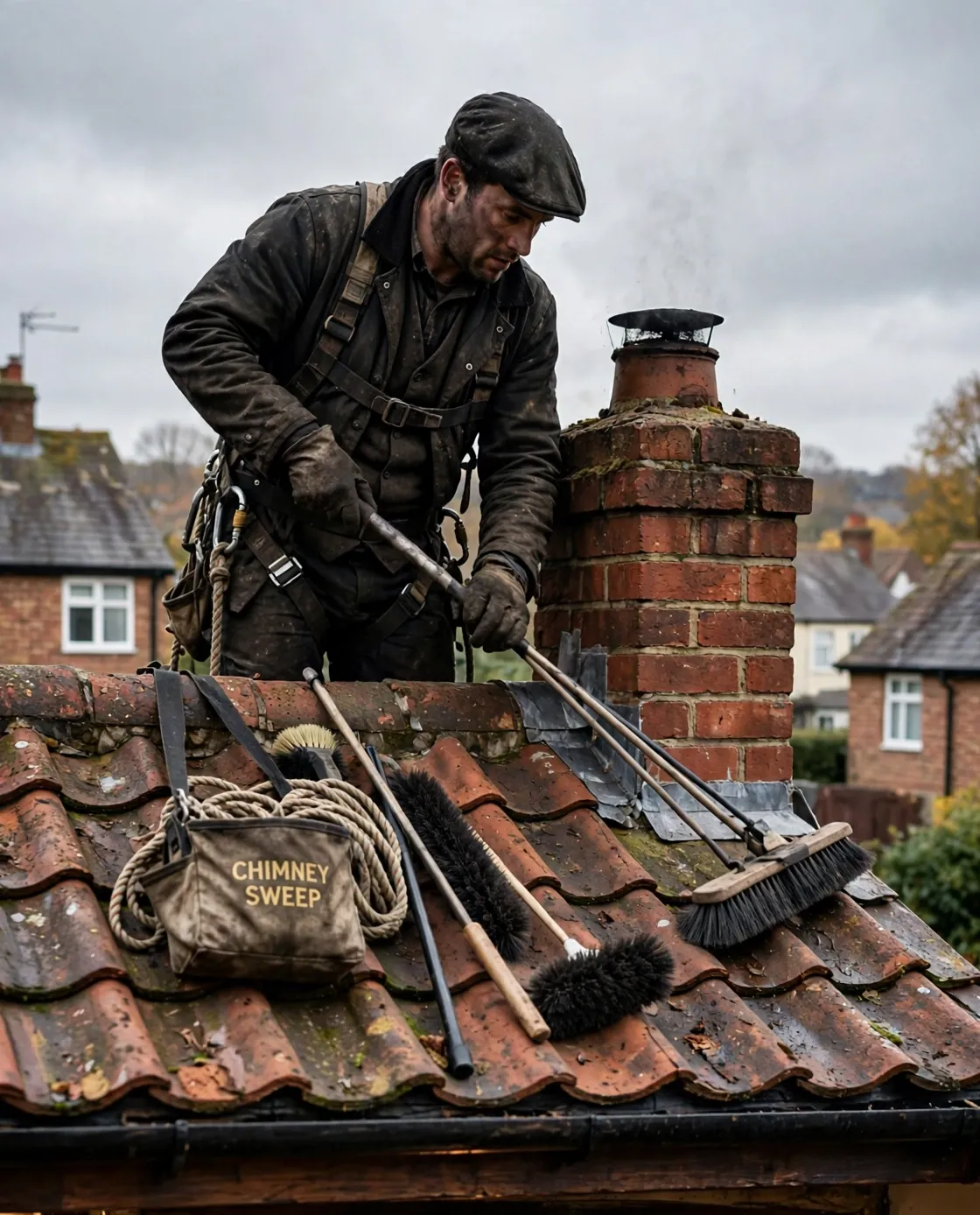
The visit usually starts with a look at the appliance and the fireplace, and a check that the fire has not been used in the previous 24 hours, so the flue is cool and the soot is settled. The sweep seals the fireplace opening with sheeting or a vacuum-sealed cover, so soot does not blow into the room, and sets up a powerful vacuum at the fireplace. The brush is then worked up the flue, either from below with rods added section by section, or from the roof where access or the flue layout requires it. Modern sweeps often use a power sweeping system, a rotating brush head on flexible rods driven by a drill, which cleans the flue walls more thoroughly than a traditional hand brush, especially in a flue with bends. The soot and debris that fall are collected by the vacuum and removed, not left in the fireplace for you to clear up.
A good sweep also inspects as they go. They will check the condition of the flue lining if it is visible, look for blockages such as birds’ nests or fallen masonry, check that the stove’s baffle plate and throat plate are intact and refitted correctly after cleaning, and run a smoke test or a draw test to confirm the flue is pulling properly. The smoke test matters: a flue can be clean and still not draw, if it is blocked higher up, if the terminal is damaged, or if a change elsewhere in the house, such as new double glazing or an extractor fan, has altered the air pressure. A sweep who skips the draw test has cleaned the flue without confirming it works.
At the end of the visit, you should receive a certificate of sweeping. This is covered in the next section, because it is the part of the job that most affects your insurance. You should also receive a note of anything the sweep found: a cracked liner, a damaged pot, a nest that could not be fully cleared, or a recommendation for a repair. A sweep is not a roofer or a chimney builder, and a repair they identify will usually need a separate quote, but a sweep who says nothing about a problem they found has not done the full job. If the sweep works from the roof, that part of the job deserves a note too: roof work on a chimney stack sits alongside the other roof jobs a house needs, and our guide to how to tell if your roof needs repair or replacement explains the warning signs, including damp patches around a chimney, that are worth checking while someone is already looking at the stack.
The Certificate and Your Home Insurance
The certificate of sweeping is a short document, usually issued by a NACS or Guild of Master Chimney Sweeps member, confirming the date of the sweep, the appliance and flue swept, and the sweep’s membership details. It is the one piece of paper that turns a sweep from a memory into evidence, and it matters for two reasons: safety and insurance.
On safety, the certificate is the record that lets the next sweep, a stove installer or a surveyor know when the flue was last cleaned and by whom. If you sell the house, a buyer or their surveyor may ask for it. If you have a stove installed or serviced, the installer may ask for it. Without it, the only evidence is your word, and a professional who is being asked to take responsibility for a flue will not rely on that.
On insurance, the position is more pointed. Many home insurers require proof of regular chimney sweeping, particularly for solid-fuel appliances, and may refuse a claim for fire or smoke damage if the chimney cannot be shown to have been swept at the recommended interval. Insurers do not all use the same wording, and not every policy contains an express sweeping condition, but the pattern is consistent enough that it should be treated as a requirement rather than a nicety: keep the certificate, keep it with the policy documents, and keep a run of them year by year rather than a single recent one. A gap in the run is the thing an insurer will ask about. If your policy does not mention sweeping, do not assume it does not matter. Ask your insurer what they expect for a solid-fuel appliance, and get the answer in writing, because a verbal assurance from a call centre is no use at claim time.
Choosing a sweep who is a member of a recognised body is part of the same point. NACS and the Guild of Master Chimney Sweeps both set standards for their members, including training and insurance, and both issue certificates in a recognised format. A sweep who is not a member can still do a good physical clean, but their certificate, if they issue one at all, carries less weight with an insurer or a surveyor. When you book, ask whether a certificate is included in the price and whether the sweep is a member of NACS or the Guild. If the answer to either question is no, that is not necessarily a reason to walk away, but it is a reason to ask what you are paying for, and to weigh the saving against the value of the paper trail.
Extras That Cost More: Nest Removal, CCTV Survey and More
A standard sweep price assumes a standard chimney: accessible, unblocked, and in reasonable condition. Anything outside that assumption is an extra, and the extras are where a quote can grow. Knowing them in advance means you can budget for them and recognise a fair extra charge when it appears.
Bird nest removal is the most common extra. Birds, particularly jackdaws, nest in chimneys in spring, and a nest can completely block a flue. Removing one is not part of a standard sweep, because it may require work from the roof, it may be protected by wildlife law during the nesting season, and it leaves debris that has to be cleared separately. Checkatrade’s local guides put bird nest removal at around £150, on top of the sweep itself. If you find a nest, do not light the fire and do not try to clear it yourself from below: a blocked flue sends carbon monoxide and smoke into the room, and disturbing an active nest during the breeding season can be an offence under the Wildlife and Countryside Act. A sweep will advise whether the nest can be removed immediately or must wait until the birds have left.
A CCTV survey of the flue is the next most common extra, at around £250 on Checkatrade’s figures. A camera is lowered down the flue to inspect the lining, joints and brickwork from the inside, and the footage shows cracks, gaps, tar build-up and damage that a brush cannot reveal. A CCTV survey is worth paying for when a sweep has found a problem, when you are buying a house with a solid-fuel appliance, when a chimney has not been swept for years, or when a stove is being installed into an old flue. It is not needed every year for a well-maintained chimney that is swept on schedule. Treat a recommendation for a CCTV survey as a diagnostic step, not an upsell, when it follows a specific finding, and ask to see the footage or the report rather than just accepting a verbal summary.
Other extras include fitting a chimney cowl or cap, which Checkatrade’s local guides put at roughly £100 to £150 for a basic cap, with decorative or bespoke caps costing more, and a bird guard, which serves the same purpose of keeping birds and debris out while letting smoke escape. A new flue liner, a stove service combined with a sweep, and repairs to the chimney stack itself are all larger jobs priced separately. Stack repairs, in particular, are a roofing job as much as a chimney job: cracked mortar, a damaged pot or failed flashing at the base of the stack all let water in, and our guides to repointing cost UK and gutter replacement cost UK cover the neighbouring costs, because a leaking stack and a failing gutter often appear together and are best quoted together.
The rule for extras is simple: a good sweep explains the extra before doing it, gives a price for it, and leaves you free to say no or to get a second opinion. An extra discovered during the sweep, such as a nest, cannot always be priced in advance, but it should still be explained and agreed before the work goes ahead, except where leaving it would be immediately unsafe. If a quote arrives with extras you do not recognise, ask what each one is for and whether it is essential now or can wait until the next scheduled sweep.
DIY Sweeping: The Honest Trade-Off
It is possible to buy a set of chimney rods and brushes and sweep your own chimney, and for a simple, straight, accessible flue with a well-fitting fireplace opening, a careful homeowner can remove a real amount of soot. The honest trade-off is not about whether DIY sweeping works at all. It is about what it does not give you, and what it risks.
What it does not give you is a certificate. A DIY sweep leaves no paper trail for your insurer, no independent record for a future buyer, and no professional inspection of the flue lining, the stove baffles or the draw. If a chimney fire or a smoke incident follows a DIY sweep, the question an insurer will ask is not whether you swept, but whether you can prove a competent sweep at the recommended interval. A DIY sweep, however thorough, does not answer that question.
What it risks is mess, damage and a false sense of security. Soot is fine, pervasive and difficult to contain without a proper vacuum and sealed sheeting, and a DIY attempt that blows soot through the house is a common story. Rods can get stuck or snap in a flue with bends, a brush that is too stiff can damage a liner, and working on a roof to sweep from above carries the same fall risk as any other roof work. More seriously, a DIY sweep can clear the soot while missing the problem the soot was hiding: a cracked liner, a partial blockage higher up, or a flue that does not draw properly will not be found by brushing alone, and the homeowner who has just swept will assume the chimney is safe.
The balanced approach is to leave the annual sweep to a registered sweep, and to use DIY effort where it genuinely helps: keeping the fireplace area clean, burning only seasoned wood with a moisture content below 20 percent, not burning treated timber, painted wood or household waste, and watching for the warning signs that mean the chimney needs attention before its next scheduled sweep. Those signs are smoke coming back into the room, a tarry smell, soot falling into the fireplace, a fire that is hard to light or will not draw, and staining on the chimney breast. Any of those is a reason to call a sweep sooner, not to wait for the annual date.
Frequently Asked Questions
How much does a chimney sweep cost in the UK?
A standard sweep typically costs around £90 to £105 on average, with most standard jobs between £75 and £150. Open fires average about £90, gas fires about £85, lined stove chimneys £90 to £140 and unlined stove chimneys £110 to £150. London jobs sit at the top of the range, at about £105 and up for a standard sweep.
How often should I have my chimney swept?
Follow the fuel, not the calendar alone. NACS guidance is quarterly when in use for wood and bituminous coal, at least once a year for smokeless fuel, and once a year for oil and gas flues. A wood burner used every evening through winter needs more than one sweep a year. At minimum, sweep every solid-fuel chimney once a year, before the heating season.
Do I need a chimney sweep certificate for home insurance?
Keep one, whether or not your policy expressly requires it. Many insurers ask for proof of regular sweeping after a fire or smoke claim, and a certificate from a NACS or Guild member is the recognised evidence. Keep a run of certificates year by year with your policy documents, and ask your insurer what interval they expect for your appliance.
What is included in a chimney sweep?
A proper sweep seals the fireplace, vacuums as it brushes, cleans the full flue length, checks the appliance and baffles, runs a smoke or draw test, and issues a certificate. Nest removal, CCTV surveys, caps and repairs are extras, priced separately and agreed before the work goes ahead.
Can I sweep my own chimney?
You can physically clean a simple flue yourself, but a DIY sweep gives you no certificate for insurance, no professional inspection of the liner or draw, and a real risk of mess, a stuck brush or a missed blockage. For most homeowners, the annual sweep is worth paying a registered sweep for, and DIY effort is better spent on burning seasoned wood and watching for warning signs.
When is the best time to book a chimney sweep?
Late summer or early autumn, before the heating season, or in spring after it ends. Both slots avoid the winter rush, and both clear deposits before they sit in the flue for months. Avoid lighting the fire for 24 hours before the visit, as most sweeps ask for a cool flue.
What should I do if birds nest in my chimney?
Do not light the fire, and do not try to clear the nest yourself. Call a sweep, who will advise whether it can be removed immediately or must wait until nesting season ends. Expect nest removal to cost around £150 on top of the sweep, and consider a bird guard or cowl afterwards to stop it happening again.