
How to Childproof Stairs in the UK: A Complete Safety Guide
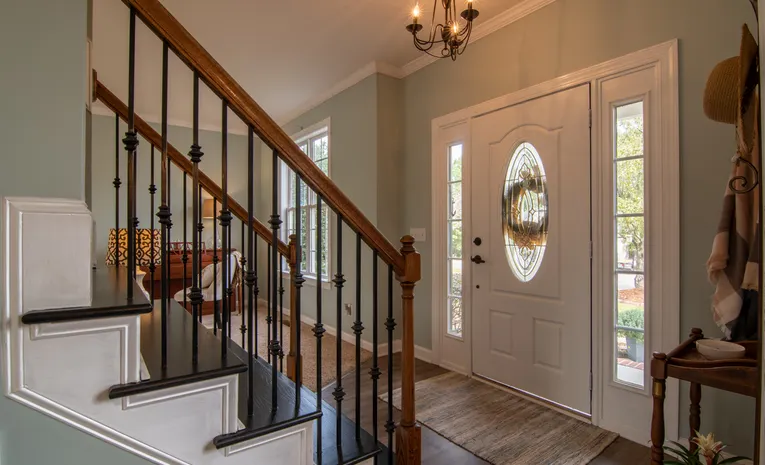
Stairs are one of the most common places for a young child to be injured at home. The good news is that childproofing a staircase properly, whether it is a traditional straight flight or an open-plan design with a bannister, is entirely achievable in a weekend with the right approach and the right products.
This guide covers when to start, which type of gate suits your staircase, how to fit one safely, and what else is worth thinking about beyond the gate itself.
When Should You Start Childproofing Your Stairs?
In short: most parents start fitting stair gates once a baby begins crawling, typically between six and ten months old, and keep them in place until a child is confident and steady enough to use stairs safely alone, usually around age two to three.
Every child develops at a different pace, so it is worth watching for signs of mobility rather than relying purely on age. A baby who is pulling themselves up on furniture or shuffling towards the stairs is ready for a gate, even if they are not yet crawling in the conventional sense.
Understanding UK Safety Standards for Stair Gates
In the UK, safety and pet gates are covered by the British Standard BS EN 1930. Any gate you buy should be clearly marked as compliant with this standard, which covers requirements such as gap sizes between bars, locking mechanism strength and stability under load. Avoid second-hand gates of unknown age or origin, since older models may predate current safety requirements.
Pressure-Fit vs Screw-Fit Gates: Which Is Right for You?
| Feature | Pressure-Fit Gate | Screw-Fit Gate |
|---|---|---|
| Installation | Wedges between walls or door frame using tension, no drilling | Screwed permanently into the wall or banister |
| Best used at | Bottom of stairs, or doorways between rooms | Top of stairs, and anywhere a fall risk is greater |
| Wall damage | None | Small screw holes |
| Security | Can be dislodged if pushed hard enough | Very secure once correctly fitted |
| Typical cost | £20 to £50 | £30 to £80 |
The safety advice on this point is consistent and important: pressure-fit gates should never be used at the top of a staircase, only at the bottom or between rooms on a level floor. At the top of the stairs, always use a properly screw-fitted gate, since a pressure gate can be pushed loose by a determined toddler or an adult stepping over it awkwardly.
Step-by-Step: Installing a Stair Gate Safely
Top of Stairs Installation
- Choose a screw-fit gate rated for the full width of your opening.
- Position the gate so it opens away from the stairs, never towards them, so it cannot be pushed open onto the steps.
- Mark and drill fixing points into solid wall or banister post, avoiding any pipework or cabling.
- Secure the gate frame fully before testing the latch mechanism several times.
- Check the gate cannot be lifted off its hinges or forced open by pushing firmly from both sides.
Bottom of Stairs Installation
- A pressure-fit gate is generally suitable here, provided the walls or door frame either side are solid.
- Position the gate at the correct height, following the manufacturer’s guidance for tension settings.
- Test that the gate holds firm when pushed and that the latch engages properly every time.
Childproofing Open-Plan and Banister Staircases
Spindle Guards and Netting
Where a staircase has vertical spindles with gaps wider than around 65 to 70mm, a curious toddler can potentially get a head or limb stuck. Clear plastic spindle guards or fine mesh netting fitted along the banister close this gap while keeping the staircase looking much the same.
Non-Slip Stair Treads
Adding non-slip strips or a stair runner reduces the risk of slips for children who are learning to use the stairs under supervision, and doubles as a sensible safety measure for the whole household.
Common Mistakes Parents Make When Childproofing Stairs
- Using a pressure-fit gate at the top of the stairs rather than a screw-fit one.
- Fitting the gate so it swings inward over the top step rather than away from the stairs.
- Leaving gaps between the gate and the wall large enough for a small child to squeeze through.
- Assuming an older sibling will always remember to close the gate behind them.
- Removing the gate too early, before a child can reliably manage the stairs unsupervised.
Childproofing for Crawling Babies vs Toddlers
A crawling baby needs a fully secured gate at all times, since they have no concept of the danger stairs present. Once a child is a confident, steady walker, supervised stair practice, holding the handrail and taking one step at a time, becomes a useful part of teaching them to use stairs safely, gradually reducing reliance on the gate as their balance and judgement improve.
Cost of Childproofing Stairs in the UK
| Item | Typical UK Cost |
|---|---|
| Pressure-fit gate | £20 to £50 |
| Screw-fit gate | £30 to £80 |
| Spindle guards or banister netting (per staircase) | £25 to £60 |
| Non-slip stair treads or runner | £20 to £70 |
| Professional installation (if required) | £40 to £80 |
Beyond the Gate: Wider Home Safety Checklist
- Secure any freestanding furniture near the top of the stairs that a child could climb to bypass a gate.
- Fit a handrail at a height a young child could eventually reach as they grow.
- Check carpet or flooring on the stairs regularly for loose edges that could cause a trip.
- Keep the stairs well lit, particularly the top and bottom steps.
Frequently Asked Questions
Are pressure-fit gates safe at the top of stairs?
No. Pressure-fit gates should only be used at the bottom of stairs or in doorways on a level floor. At the top of the stairs, a screw-fit gate is the safer choice, since it cannot be dislodged by a child pushing against it.
How do I childproof a staircase with a bannister?
Fit spindle guards or fine mesh netting along any gaps wider than roughly 65 to 70mm, in addition to a properly fitted gate at the top and bottom of the stairs.
What age can children stop using a stair gate?
Most families remove stair gates somewhere between age two and three, once a child can reliably hold a handrail and manage steps under supervision. Every child is different, so judge readiness by ability rather than age alone.
Do stair gates need to meet a specific safety standard in the UK?
Yes. Look for gates marked as compliant with BS EN 1930, the British Standard covering safety and pet barrier gates.
Related Reading
- Clever Storage Ideas for a Small Bedroom in the UK
- Teen Bedroom Design Ideas for Style, Study and Storage
About the author: This guide was written by the Routen House editorial team, referencing current UK safety standards for stair and safety gates.